Categories
AI Failure Mark Zuckerberg Technology

Mark Zuckerberg’s Meta AI glasses failed multiple times in front of a live audience


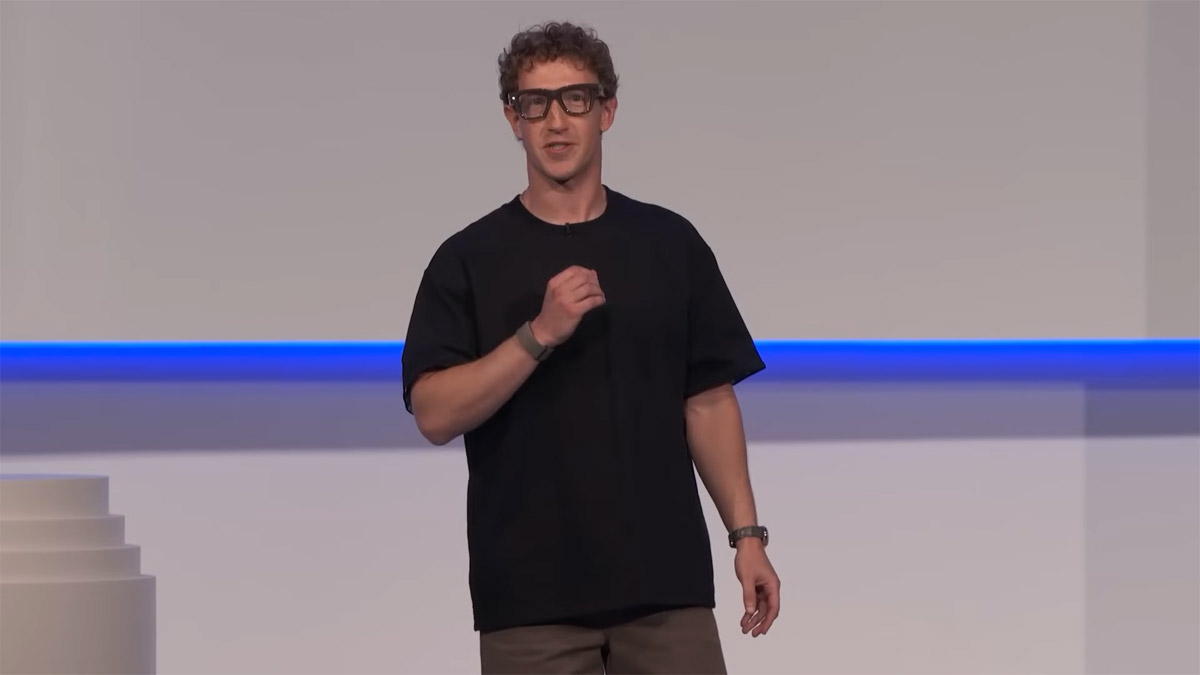
Mark Zuckerberg hasn’t been having a good month of PR, and it couldn’t be happening to a better tech billionaire. First The New York Times ran a deep dive on the Meta CEO’s destructive takeover of an historic neighborhood in Palo Alto, all so he can build a mega compound (one of at least two he has). Then Zuck paid a visit to the emperor for a White House tech summit where he was caught on a hot mic making up investment numbers for Dementia Don. And now this: Meta held its annual Connect Conference last week, and Zuck took to the stage to tout the Ray-Ban Meta Glasses (Gen 2), a collaboration with the iconic eye wear brand, of AI-equipped frames. This second generation was supposed to have optimized the “seamless discussion experience,” so instead of saying “Hey Siri” to your phone, you can say “Hey Meta” to your glasses and get immediate and entirely accurate responses from the machinery. Only, guess what didn’t work during not one but two live demonstrations?

To demonstrate the tech, Zuckerberg spoke to food influencer Jack Mancuso via video link and told the AI to help the chef whip up a “Korean-inspired” steak sauce using ingredients in the kitchen.

Business Insider reported the vision unraveled when the AI glitched moments after the request, ignoring basic instructions and insisting that the employee had “already combined these ingredients.”

Despite the confidence of all involved, things continued unraveling. “What do I do first?” Mancuso asked the AI three times, his voice growing increasingly panicked as it ignored his basic requests.

“You’ve already combined the base ingredients, so now grate the pear and gently combine it with the base sauce,” it responded twice.

The segment was abruptly cut short after the panicked employee and a visibly flustered Zuckerberg blamed the AI’s failure on “bad wifi,” a flimsy excuse met with pity cheers from the audience.

“It’s all good. You know what? It’s so good,” said Zuckerberg as he tried to get the presentation back on track. “It’s, uh, the irony of the whole thing is that you spend years making technology and then the wifi at the end of the day catches you.”

But the event descended even further into farce just moments later, when, during the next segment, Zuckerberg’s attempts to use the glasses and wristband to make a video call fell completely flat and left the CEO making feeble hand gestures and mumbling awkwardly onstage after the AI failed to connect the call on four separate occasions.

Zuckerberg was eventually bailed out when Meta CTO Andrew Bosworth, whom Zuck had been attempting to make the call to, appeared on stage.

“This wifi is brutal,” he joked, eliciting nervous laughter from those in attendance.

“Yeah, I don’t know,” Zuckerberg responded. “We’ll debug that later. You practice these things like 100 times, and then, you never know what’s going to happen.”

“I promise you no one is more upset about this than I am, because this is my team that now has to go debug why this didn’t work on the stage,” Bosworth added.

In addition to the cringe-factor, Wednesday’s humiliation was also a damning indictment of Zuckerberg himself, who this year took personal control of the company’s artificial intelligence division and offered new hires eye-popping salaries of up to nine figures in a desperate attempt to regain a foothold in the AI race after becoming frustrated with Meta’s relative lack of progress and several high-profile failures.

[From Daily Beast]

What a putz, blaming it on the wifi! Luckily for us, both snafus were captured on camera. When Zuck is unable to place the video call, you can practically see the cartoon steam bursting out of his head. Then the failed cooking segment, oy. The influencer, Jack Mancuso, really was panicked, and also had no sense of how to ad lib, he just kept repeating “What do I do first?” and hoping for a different result. Call me crazy, call me a curmudgeon, call me woefully behind the times… but whatever happened to cook books?! Or printing out a single recipe to follow? Granted I have a bias for analog methods, but with cooking I like to have the written directions in front of me to refer to, and I seriously doubt I would catch everything from hearing it alone. Even more especially because I tend to do more baking than cooking; only hearing measurements as opposed to seeing them would be a recipe for disaster. Sidenote: one of the most thoughtful gifts I ever got was a tea towel my aunt had printed with my grandmother’s chocolate chip cookie recipe, in my grandmother’s handwriting from the scrap of paper she wrote it down on. AI couldn’t give me that, even when it “works.”


Photos credit: Will Oliver/POOL via CNP/INSTARimages.com, screenshots via YouTube

Categories
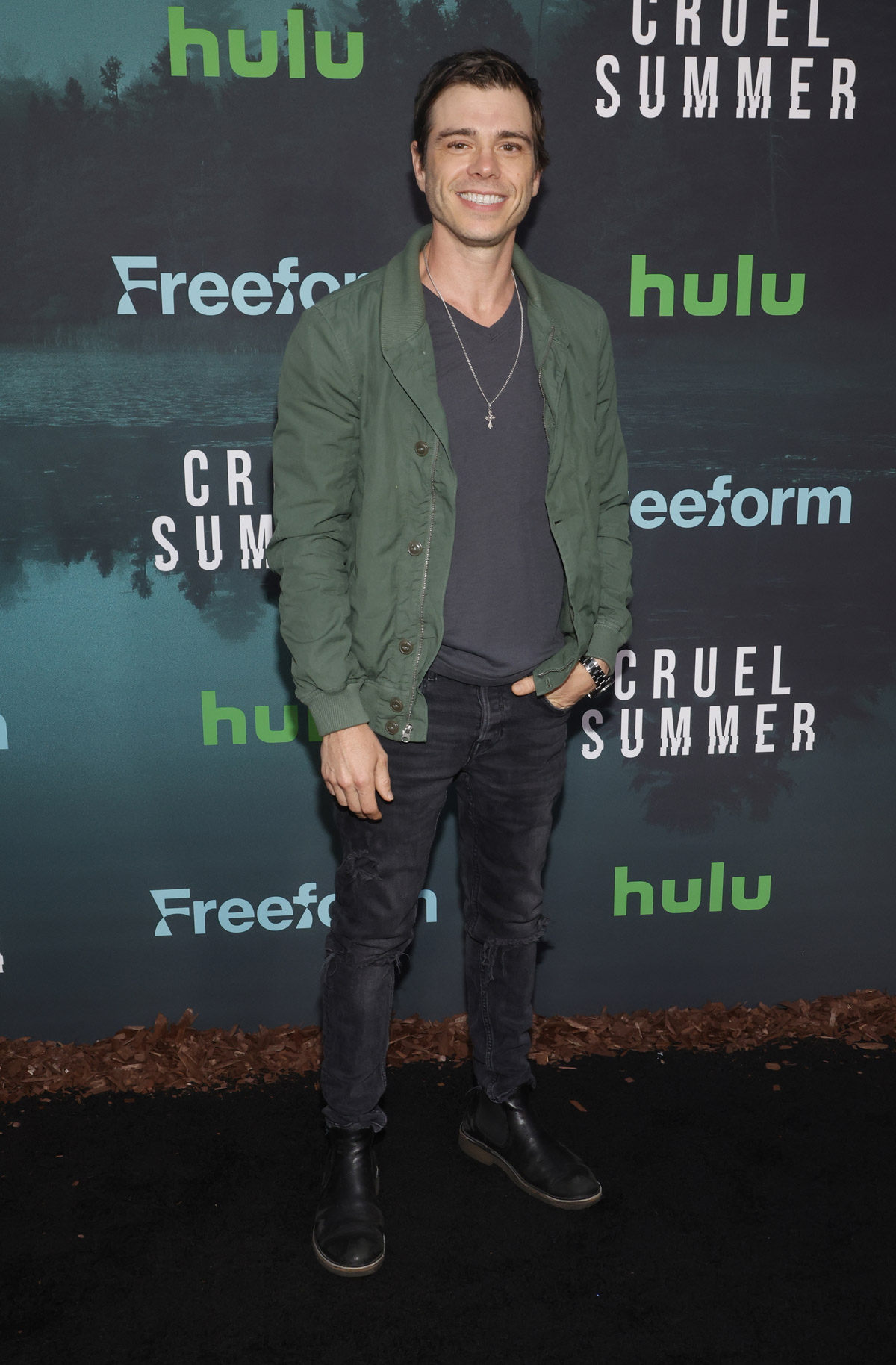
AI Comic-Con Matthew Lawrence Robin Williams

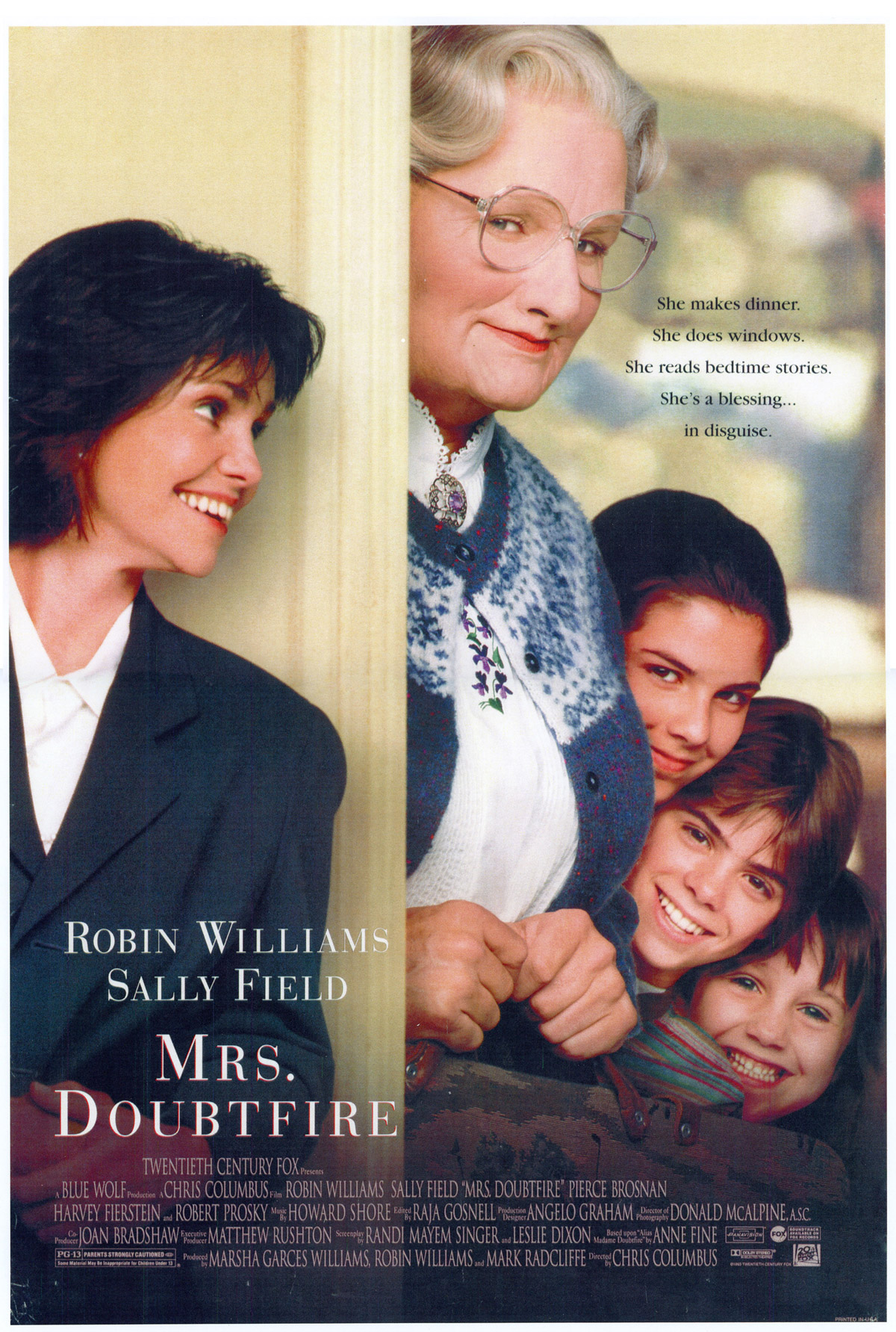
Mrs. Doubtfire’s Matthew Lawrence wants Robin Williams to be the voice of AI


It’s the news that possibly some people are talking about: The Lawrence Brothers were at San Diego Comic-Con this year. Huey, Dewey, & Louie Joey, Matthew & Andrew are there to plug their latest joint venture: a graphic novel called The Lawrence Brothers Detective Agency, which they describe as their own mash up of The Hardy Boys, Scooby-Doo, Barry, and BoJack Horseman. That’s… a lot. The idea came to them 15 years ago when they were on vacation together, and is currently one month into a Kickstarter campaign to fund it. As of this writing, the bros have raised $16,377 towards their goal of $50K. If that doesn’t work, maybe they can apply for an NEA or NEH grant— oh, wait, never mind. What’s really making headlines out of their appearance, though, are some comments middle-brother Matthew made about his Mrs. Doubtfire costar Robin Williams. Matthew thinks it’d be so cool if Robin, whom we lost 11 years ago, was posthumously made into the “voice of AI.” The idea came to him when he stumbled on an old commercial in which Robin spoke in a “computerized” voice.

Move over, Siri and Alexa. Matthew Lawrence believes that his late Mrs. Doubtfire costar Robin Williams should be the next “voice of AI.”

The actor, who played one of the children nannied by Williams’ titular Mrs. Doubtfire in the 1993 comedy, tells Entertainment Weekly that he would love to use artificial intelligence to “do something really special” with the late comedian’s voice. Williams died by suicide at 63 in 2014.

“I would love — now, obviously, with the respect and with the okay from his family — but I would love to do something really special with his voice because I know for a generation, that voice is just so iconic,” Lawrence shares in EW’s Comic-Con video suite on Friday.

“It’s not just the fact that I knew him and worked with him and so it’s in my head — it’s in everybody’s head. And it would be so cool.”

The idea came to Lawrence after watching one of Williams’ old commercials and realizing that it contained some interesting present-day parallels.

“It’s kinda like this very contemporary, modern, almost sort of foreshadowing of what’s going on commercial that he did, where he did this computerized voiceover,” he explains. “And it always stuck with me. And then, during his passing, with the AI coming out, I’m like, ‘Man, he’s gotta be the voice of A.I. He’s gotta be the voice in something.’ So yeah, I would love to do that.”

The uses for the program are potentially endless, including having Williams become the helpful voice giving you driving directions on your phone. “It would be Robin!” Lawrence cheers. “It would be so cool. I’m telling you.”

When speaking with EW in April, Lawrence explained that Williams taught him two really important life lessons during the film’s production: the “type of compassion you need to have for people,” and how you “don’t judge until you walk in someone else’s shoes.”

[From Entertainment Weekly]

I mean, where do we even begin here? There’s the thin logic of, “His voice is in my head, that means it’s in everyone’s head!” There’s the ridiculousness of Matthew hatching this idea after hearing Robin use a robot voice in an ad. There’s the weirdness of an actor advocating for the use of AI, not for themselves but with another actor. There’s Matthew being all giddy saying, “I would love to do something really special with his voice,” and then the ONLY concrete example given is using Robin’s voice… for the GPS on our phones. That one really cracked me up. But the most important issue with this bonkers suggestion from Matthew, is the bit where he says, “With the respect and with the okay from his family.” Clearly, Matthew didn’t have the respect to check out if the family had put out any thoughts about Robin and AI, before he went and blabbed about it to the press. Because Robin’s daughter Zelda Williams has been on the record for years now with her anti-AI views in general, and also specifically how disturbing it has been to unwittingly encounter AI versions of her father that have already been made.

Between this and Matthew totally telling on himself earlier this year, in his anecdote about working with Gabrielle Union in the 1990s, maybe Matthew might want to run his thoughts by one or a few people before he takes them live? Just a thought.

Embed from Getty Images

Embed from Getty Images

Embed from Getty Images

Photos credit: Faye’s Vision/Cover Images, WENN/Avalon, Getty

Categories
AI Books

Authors write open letter to publishers urging them not to release AI books

Embed from Getty Images


The fight to protect creative works from being copied by AI without consent or compensation got a big assist a few weeks ago when big Hollywood studios Disney and Universal jointly sued AI image generator company Midjourney. A bigwig like Disney stepping into the fray was just the kind of deep-pocketed mouse muscle artists have needed in their corner. (Plus I’m sure Disney loves the PR angle of making themselves David vs. Goliath, though really it’s more like Godzilla vs. Goliath.) But this is a battle with many fronts, of which image generating is but one. On the written word side of things, a sizable group of authors have just banded together on a new strategy: instead of suing another AI company, about 70 authors — including Jodi Picoult and Gregory Maguire — have signed an open letter and petition directed towards the main US publishing houses, seeking their word that “they will never release books that were created by machines,” nor replace human staff with AI tools.

A letter to the publisher: Addressed to the “big five” U.S. publishers — Penguin, Random House, HarperCollins, Simon & Schuster, Hachette Book Group, and Macmillan — as well as “other publishers of America,” the letter elicited more than 1,100 signatures on its accompanying petition in less than 24 hours. … The letter contains a list of direct requests to publishers concerning a wide array of ways in which AI may already — or could soon be — used in publishing. It asks them to refrain from publishing books written using AI tools built on copyrighted content without authors’ consent or compensation, to refrain from replacing publishing house employees wholly or partially with AI tools, and to only hire human audiobook narrators — among other requests.

AI cannot replace art & artists: “The writing that AI produces feels cheap because it is cheap. It feels simple because it is simple to produce. That is the whole point,” the letter states. “AI is an enormously powerful tool, here to stay, with the capacity for real societal benefits—but the replacement of art and artists isn’t one of them.”

Courts recently gave AI a win: Earlier this week, federal judges presiding over two such cases ruled in favor of defendants Anthropic AI and Meta, potentially giving AI companies the legal right under the fair use doctrine to train their large language models on copyrighted works — as long as they obtain copies of those works legally. Young adult fiction author Rioghnach Robinson, who goes by the pen name Riley Redgate, and is one of the organizers of the letter and petition, said these rulings only make the need for safeguards feel more urgent. “With courts allowing AI access to copyrighted texts as fair use, the next — and possibly last — line of defense has to be the publishers” she said.

Some promising responses from the publishers: “Many individual contracts now have AI opt-out clauses in an attempt to keep books out of AI training datasets, which is great,” Robinson noted. But she said publishers should be doing much more to defend their writers against the onslaught of AI. “There are major concerns that publishers might create generative AI titles of their own that could swallow the publishing landscape, or replace editorial workers with AI tools, or the like,” she said. NPR reached out to all five of the publishing houses named in the letter, and received one response ahead of the publication deadline. “Simon & Schuster takes these concerns seriously,” spokesperson Susannah Lawrence said in a statement. “We are actively engaged in protecting the intellectual property rights of our authors.”

[From NPR]

Of course writers came together to… write a letter in protest. I think it’s a genuinely important move — it illustrates clearly to us readers/consumers all that’s at stake, and it creates a public dialogue in which we can track how satisfactorily the publishing houses respond. I just also find it endearingly quaint that they literally took up the pen for this battle. Ultimately, I think we need more of this kind of action, and to keep up with the lawsuits. Because these cost-cutting measures are already underway across all creative industries, from AI taking over narration and voice acting work, to other human jobs being outsourced, often unsuccessfully. And that’s really what keeps stumping me about this big AI mess: it’s not even doing that great a job! Certainly with regards to artistic endeavors. This technology cannot function without being “trained” on the work of humans. AI on its own is never going to spit out Green Eggs and Ham. But if/when AI does absorb already existing material and learns to regurgitate, then it’s coming to take the jobs of people. Humanity in the 21st Century: hastening our own redundancy.

Embed from Getty Images

Categories
AI James Earl Jones Lawsuits SAG-AFTRA

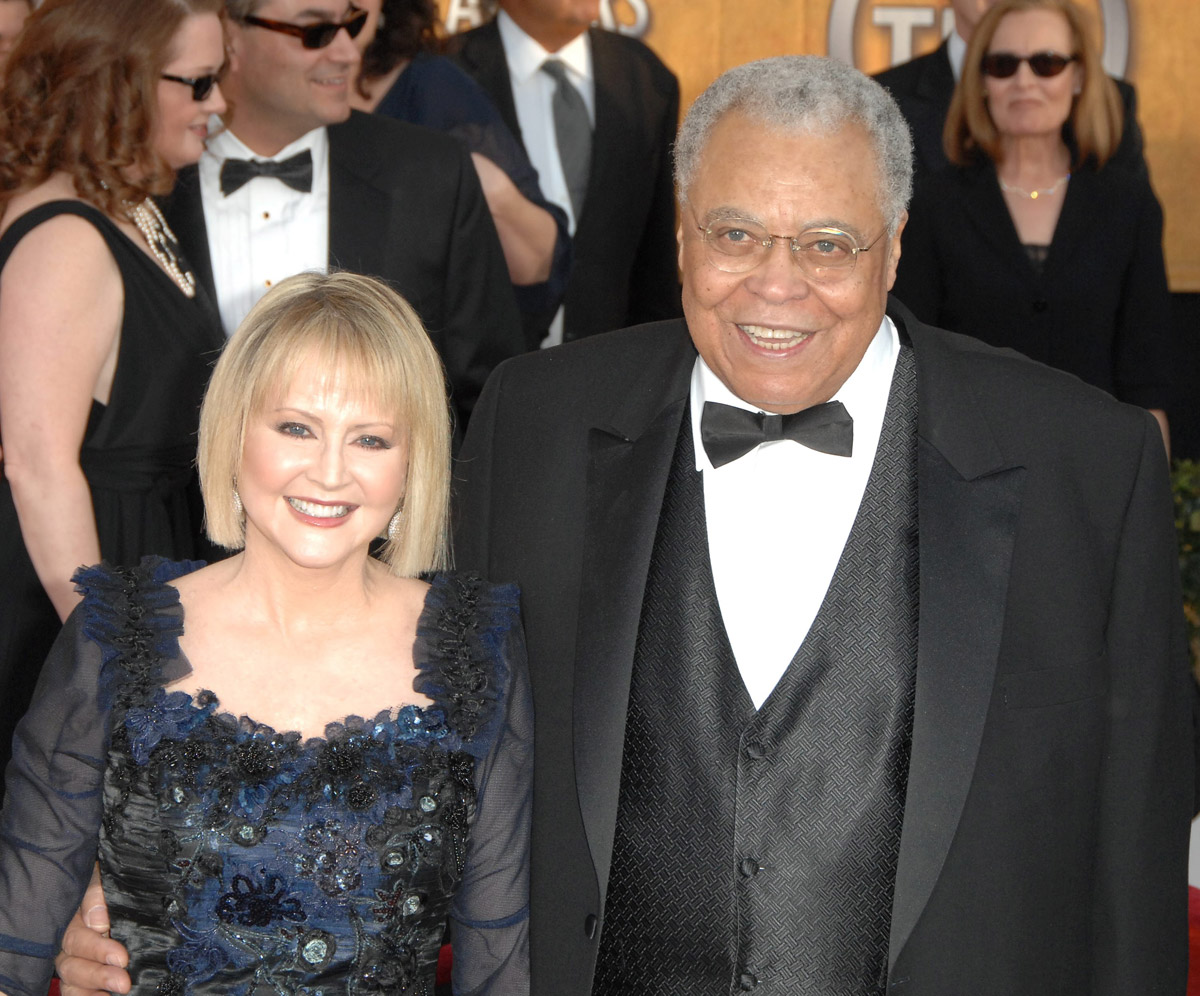
SAG-AFTRA sued Fortnite over an AI version of James Earl Jones’s voice


Darth Vader, Fortnite, and AI walk into a bar… and by “bar” I mean a legal dispute. Last September, California passed a bill requiring companies to obtain consent before making AI replicas of deceased artists. You’d think plain old decency would have meant that practice was already in place, but it seems AI hasn’t been trained on the concept of decency yet. SAG-AFTRA was especially thrilled with the bill, after AI protections for actors was one of the key issues during the 2023 strike. So here’s a new wrinkle: last September we also lost the great James Earl Jones, who, amid a storied career, was the voice of Darth Vader. Turns out Jones bequeathed permission for studios “to use A.I.-backed recreations of his voice” posthumously, which is what Llama Productions recently did to use the signature Vader voice in their video game Fortnite. They received permission from his estate, so no problem, right? Wrong! SAG-AFTRA is none too pleased that they weren’t notified and given a chance to bargain on behalf of their members, so they’ve filed an unfair labor practice charge against Llama.

Llama, who are perhaps best known for their work on the hit gaming franchise Fortnite, has recently featured an A.I. recreation of James Earl Jones’ immortal Star Wars villain, Darth Vader, in their latest expansion. The A.I.-generated recreation of Jones’ voice was added to Fortnite with the express permission of the actor’s estate.

According to SAG-AFTRA’s charges, however, Llama Productions had failed to notify the actors’ union of the A.I.-powered performance without proper notice, as reported by AP News.

In a written statement from the organization, SAG-AFTRA cited their particular issues with Llama’s recreation of Jones’ iconic villain, including the fact that the A.I.-generated performance takes potential work away from a willing voice actor.

“We celebrate the right of our members and their estates to control the use of their digital replicas and welcome the use of new technologies to allow new generations to share in the enjoyment of those legacies and renowned roles,” the statement reads. “However, we must protect our right to bargain terms and conditions around uses of voice that replace the work of our members, including those who previously did the work matching Darth Vader’s iconic rhythm and tone in video games.”

Jones — who passed away last September at the age of 93 — remains one of the key prominent actors who gave formal permission to prospective studios (such as Disney) to use A.I.-backed recreations of his voice in any future media. In SAG-AFTRA’s eyes, however, this decision could hamper the potential for working actors hoping to play the role of Jones’ most notable characters, potentially upending the larger entertainment industry as a result.

“Fortnite’s signatory company, Llama Productions, chose to replace the work of human performers with A.I. technology,” the organization wrote. “Unfortunately, they did so without providing any notice of their intent to do this and without bargaining with us over appropriate terms. As such, we have filed an unfair labor practice charge with the NLRB against Llama Productions.”

[From Parade]

As I often say when we get another artificial intelligence-prompted lawsuit, the fields of law this technology is generating is staggering. So not only will AI companies need to seek express permission of actor’s and/or their estates (hopefully the law will expand beyond just California), but, if subsequent laws are passed as a result of this case, the AI companies will also need to negotiate with unions. Again, the amount of very, very specific law to be written in relation to AI is enough to add a year to law school, I swear. Also, I wonder why Jones went ahead and gave future permission for his voice to be AI-replicated after his death. Did he get a big payout, or a nice licensing deal that goes to his estate? It’s unusual, considering most of the stories we hear are of celebs railing against AI, both here and in the afterlife. Having worked with the estate of a musical artist, I can also attest that the people left in control can be hawkishly protective of that artist’s legacy, and I mean that equally in terms of sentimental and fiscal factors. It’ll be interesting to see how this case plays out. The history, and law books, are waiting.

Embed from Getty Images

photos credit: Robin Platzer/Twin Images/Avalon, Darla Khazei/Avalon, Enzo Fornino/Avalon

Categories
AI Books Media

Chicago Sun-Times apologizes for AI-generated summer reading list


Though I didn’t fully appreciate it at the time, one of the best day jobs I ever had was as a receptionist. Not because I have a great love of patching phone calls through, but because I basically got to sit up front by myself and read all day. What a luxury! Then I was an idiot and accepted a promotion, sigh… When it came to the very personal question of selecting which books to read, obviously I followed word of mouth from friends and family, plus building a network of favorite authors and seeking out their work. I also picked up from my mother checking out recommendations from Vanity Fair, People Mag, and perusing the recent releases section of the library. So my head and heart go out to the readers of major newspapers last weekend who sought out a summer reading list. Why? Because the list turned out to be an AI-generated collection of books that, to quote the Chicago Sun-Times’s apology, “do not exist.” Read the human-penned apology for yourself:

On Sunday, May 18, the print and e-paper editions of the Chicago Sun-Times included a special section titled the Heat Index: Your Guide to the Best of Summer, featuring a summer reading list, that our circulation department licensed from King Features, a unit of Hearst, one of our national content partners. The special section was syndicated to the Chicago Sun-Times and other newspapers.

To our great disappointment, that list was created through the use of an AI tool and recommended books that do not exist. We are actively investigating the accuracy of other content in the special section. We will provide more information on that investigation when we have more details.

The Chicago Sun-Times has committed its strong journalism resources to local coverage in the Chicago region. Our journalists are deeply focused on telling the stories of this city and helping connect Chicagoans with one another. We also recognize that many of our print readers turn to us for national and broader coverage beyond our primary focus on the Chicago region. We’ve historically relied on content partners, such as King Features, for syndicated materials to help supplement our work, including national articles as well as comics and puzzle books.

King Features worked with a freelancer who used an AI agent to help build out this special section. It was inserted into our paper without review from our editorial team, and we presented the section without any acknowledgement that it was from a third-party organization.

King Features released a statement to Chicago Public Media saying it has “a strict policy with our staff, cartoonists, columnists, and freelance writers against the use of AI to create content. The Heat Index summer supplement was created by a freelance content creator who used AI in its story development without disclosing the use of AI. We are terminating our relationship with this individual. We regret this incident and are working with the handful of publishing partners who acquired this supplement.”

We are in a moment of great transformation in journalism and technology, and at the same time our industry continues to be besieged by business challenges. This should be a learning moment for all journalism organizations: Our work is valued — and valuable — because of the humanity behind it.

At Chicago Public Media, we are proud of our credible, independent journalism, created for and by people. And part of the journalistic process is a commitment to acknowledging mistakes. It is unacceptable that this content was inaccurate, and it is equally unacceptable that we did not make it clear to readers that the section was produced outside the Sun-Times newsroom. Our audiences expect content with our name on it to meet our editorial standards.

[From Chicago Sun-Times]

Chicago Sun-Times: “It wasn’t us, it was our third-party partner King Features! We maintain the highest journalistic integrity!” King Features: “It wasn’t us, it was a lone rogue nameless freelancer! We demand the highest integrity from our freelancers! But, yeah, oops.” Am I the only one getting a kick out of the gravely serious tone of this notice? Yes, they totally f–ked up, but the language here is so self-flagellating… all for an explanation that’s still basically passing off the buck to someone else, not once but twice. Something about the high stakes with which they’re treating the snafu is tickling my funny bone. This totally feels like it could be an episode of the forthcoming midwestern newspaper-set Office reboot, The Paper!

As for the AI of it all, between the technology ascribing fake movie reviews to real critics in the Megalopolis trailer, to its making an X-rated boo-boo by slapping the Wicked Barbie doll boxes with a link to an adult website, at what point can we drop the “intelligence” part, and just call it “artificial”?

Photos credit: Anna Tarazevich/Pexels, Lory Lory/Pexels, Mike Jones/Pexels

Categories
AI Billie Eilish Met Gala

Billie Eilish responds to criticism of her Met Gala look: that’s AI, I was in Europe


At the Met Gala in 2023


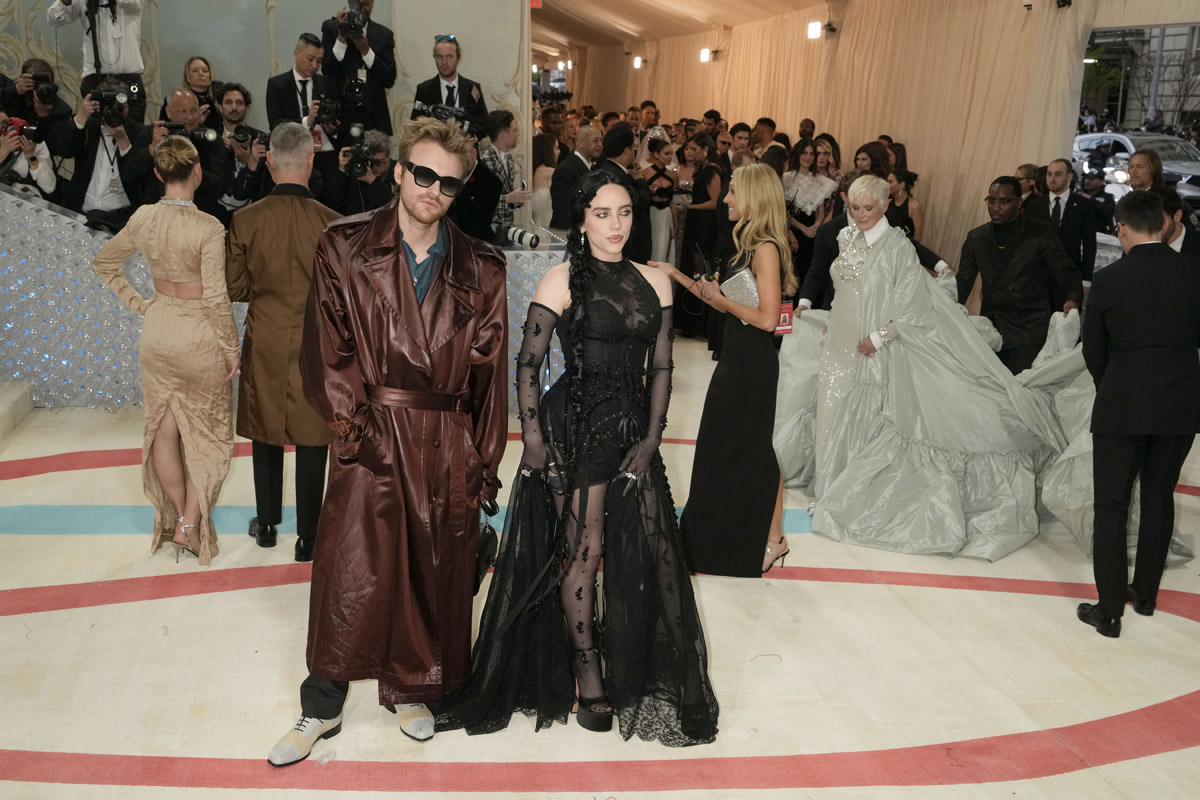
One of the celeb looks we didn’t cover from last week’s Met Gala was Billie Eilish. Why? Because she wasn’t there! But that didn’t stop people from playing with AI to place Billie at the event and proceeding to trash the look. What a lovely snapshot of our culture. So this week Billie got wind of people trolling her rose-adorned suit for the Superfine: Tailoring Black Style theme — you know, the outfit she never wore — and made a little “WTF?!?” video that went up on her Instagram Stories on Wednesday. Presumably she was filming from Europe, where she’s on her Hit Me Hard and Soft Tour, and in fact had a show in Amsterdam the night of the first Monday in May, an ocean and several time zones away from the Met Gala.

Billie Eilish is responding to criticism of her Met Gala look, noting that she did not even attend the May 5 event.

The singer, 23, took to Instagram Stories Wednesday to discuss an AI-generated image of her that was being circulated online.

“Seeing people talk about what I wore to this year’s Met Gala being trash — I wasn’t there,” Eilish said as she ate an ice cream cone.

“That’s AI. I had a show in Europe that night. Let me be! I wasn’t even there!” she added.

The star is currently on her Hit Me Hard and Soft Tour and was performing in Amsterdam the night of the Met Gala.

The tour, which kicked off in September, runs through July. Her album of the same name arrived in May 2024.

[From UPI via Yahoo]

Whelp, I guess “fake AI pic of a celeb attending the Met Gala” is now a part of the annual soiree. Last year Katy Perry got the treatment, when people dressed her up in a couple different designs for the 2024 theme, Sleeping Beauties: Reawakening Fashion. With the Katy photos, I couldn’t help but snark at the fact that the technical wizardry of AI still spat out the wrong carpet backdrop. In the Billie image that might be Photoshop, it’s hard to tell.

As for Billie’s reaction, I feel for her on this one! It’s reasonable to be appraised for something you did do, but no one should have to face flak for something that’s made up! By someone else! That’s like a friend being mad at you for something you did to them… in a dream. Life is insane enough as it is these days, let’s please only hold each other accountable for things that actually happen in the real, waking world. And let’s also get to discussing the truly important things — like what is this ice cream cone Billie is feasting on? It looks like chocolate, but I want to know more!

Billie Eilish reacts to people trashing her Met Gala outfit this year, which was AI-generated as she wasn’t there:

“Seeing people talk about what I wore to this year’s Met Gala being trash… I wasn’t there. That’s AI. I had a show in Europe that night… let me be!” pic.twitter.com/z9Rj4QEAKQ

— Pop Base (@PopBase) May 15, 2025

This is AI/Photoshop:

????| Billie Eilish has arrived at the #MetGala 2025 carpet. pic.twitter.com/eS7afXKorG

— shamaeel⋆ ˚ ౨ৎ ⋆。˚ ⋆ (@b1rdsoffeather) May 5, 2025

Embed from Getty Images

Embed from Getty Images

Photos credit: JPI Studios/Avalon, Getty and via Twitter

Categories
AI Joseph Gordon Levitt Technology

Joseph Gordon Levitt: AI companies are saying ‘we don’t have to pay you’


A major sticking point during the Hollywood strikes in 2023 was the use of artificial intelligence. The agreements they reached had provisions about how an actor’s digital likeness was used, including compensation. However, that is only one-half of the fight over AI. Last week, The Atlantic revealed that Google’s parent company, Meta, illegally used more than 7.5 million published works to train their new AI model, Llama3.

Millennial darling Joseph Gordon-Levitt started a Substack last month called Joe’s Journal. He brings up topics on his mind including the use of AI in the entertainment industry and beyond. It’s a nuanced post in which he reveals that his wife used to work for OpenAI, acknowledges that some AI can be used for good, but also warns of the existential threat it poses to all creators. As a follow-up, Joseph sat down with People to go into more detail.

Why do a Substack: “I’ve always been a big user of technology to connect with community and audiences,” says Gordon-Levitt, noting that he’s “less and less inspired” by algorithm-driven social media. “Substack feels it’s just a new great way of going back to the basics.”

A warning about AI companies not being on the level: “The entertainment industry might be the canary in the coal mine, but everybody with jobs throughout almost any industry in our whole economy has to be paying attention to how this technology is evolving. Anybody whose work is delivered on a computer, that data can be sucked up by these [AI] companies. And what they’re currently saying is, ‘Hey, we don’t have to pay you’ … To me, this sets a really bad precedent.”

Make it good but fair: The Killer Heat star is quick to add that AI can be a tool for good. “When I think about the upsides of what this technology could do, it’s super exciting,” he says. But, he reiterates, “if it’s going to be good for everybody and not just good for a few big businesses, then it’s got to be set up in a fair way.”

He’s not the only actor ringing alarm bells: Many of his Hollywood screen partners agree. Friend and Poker Face star Natasha Lyonne recently led an open letter, signed by the likes of Mark Ruffalo, Aubrey Plaza and Cynthia Erivo, urging the government to uphold copyright laws amid the loosening of AI regulations. Gordon-Levitt’s Don Jon costar Scarlett Johansson spoke out last month about the “1000-foot wave coming” after her likeness was used against her will, denouncing “the misuse of A.I., no matter what its messaging” in a statement.

It’s going to be worse than social media: The dangers of AI also constitute a newsletter topic because of the implications the tech holds for children, Gordon-Levitt points out. “Ask any parent, ‘What do you think of the way your kid relates to social media?’ Everyone’s worried,” he says. “AI is going to be like social media, but a lot more powerful. And a lot worse… There’s concrete proof that a lot of the biggest technology companies today target kids in a merciless way.”

[From People]

Like Joseph, I think that AI can be used for good in the right space and place, like with some of Alexa’s functions or a roomba. But just like with everything else, it desperately needs to be regulated. He’s right about how cavalier companies are about stealing IP, too. Meta claims that they stole all of those published works because they didn’t want to wait for permission. You know, one of those “ask for forgiveness later” situations. (If you’re a published author, you can use The Atlantic’s database to search for your name.) Well, you can’t unring that bell and, despite all the pending lawsuits, it’s unlikely there will be consequences. It’s unethical and it’s gross. People deserve to be paid for their work. I have no idea how to stop it other than seriously enacting and enforcing regulations.

photos credit: Xavier Collin/Image Press Agency/Avalon, Jeffrey Mayer/Avalon, T. Jackson/Backgrid, Getty Images for Netflix