Categories
Birds Nature New York City

A parakeet in Central Park joined a flock of sparrows, needs an indoor home for winter


Since the 1960s, Brooklyn’s Green-Wood Cemetery has been the unlikely home of wild monk parakeets. You may be wondering how a flock of seemingly religious parakeets wound up in a nonsectarian cemetery (ok, they’re not really birds of the cloth; they’re so-named because someone thought the signature gray patch on their heads looked like a monk’s cap). The purported answer is a true New York story: a crate of the birds broke open at JFK, presumably upon arrival from the species’ native Argentina. Luckily, the New York climate was close enough to their Andean habitats that monk parakeets were able to survive and thrive and become yet another example of how immigrants enrich America.

For today’s story, though, we’ll be flying north to Manhattan’s Central Park, where a parakeet of a different feather is making news. Named Mei Mei by the birders who have been following her exploits, this parakeet is a budgerigar (budgies for short) who are native to the warmer-climes of Australia. Birders immediately clocked Mei Mei when she showed up in Central Park in late August because, well, it’s hard to miss the neon green ladybird flying with a bunch of brown-colored house sparrows. The sparrows have totally welcomed Mei Mei into their flock, which is adorable! Except Mei Mei isn’t built for the northeast winter rapidly approaching, which is why birders are trying to capture and re-home her.

Mei Mei has been hopping around the Seneca Village area of Central Park near the Upper West Side since at least Aug. 20, when birders theorize she first became lost — whether she escaped from a home, split from a breeder or was intentionally released.

The Budgerigar, also known as Budgies or common parakeets, spent her first days of freedom alone and spent some time with a flock of cowbirds, but it wasn’t long before a group of House Sparrows claimed her as one of their own.

…Unlike their Argentinian-born cousins the monk parakeets that have taken over the Greenwood Cemetery and can be found living wild all over New York City, Budgies are only used to warm weather and do not have enough body fat to survive the Big Apple’s winters.

In her short time out of captivity, Mei Mei has apparently embraced her new life as a free bird — lost parakeets are known to perch on human fingers, even those of strangers, but Mei Mei flees with her new flock every time a person approaches.

She’s even attuned her behavior to match those of the House Sparrows, who do not fly south for the winter, said David Barrett, the brains behind the popular X account Manhattan Bird Alert.

“The Budgerigar survives by eating grass seeds and possibly bugs. She stays safe by foraging with a House Sparrow flock: if one notices danger and flies away, the entire flock will join in flight. This affords protection from birds of prey like hawks or falcons, which are present in the park,” said Barrett.

“This is great for its short-term survival, but it now behaves like a wild bird, and this makes it quite challenging to rescue by ordinary means.”

Mei Mei’s new life has the birding community split, with some celebrating her newfound freedom as symbolic, while others are frantically trying to put her back in a cage.

The Australian birds do not store fat and cannot survive once temperatures drop below 50 degrees, meaning rescuers have just about four weeks to capture Mei Mei and bring her indoors.

Birders are hoping that the impending cold weather will slow Mei Mei down enough so they can finally catch her.

[From NY Post]

Gah, this one’s a real heart-wrencher! On the one hand, Mei Mei has found her chosen family and they’ve welcomed her with open wings. That’s beautiful and should be celebrated and we humans could stand to follow their example! On the other talon — we want Mei Mei to live!! At what cost freedom and living life on your own terms? This isn’t merely the tale of a wayward bird; it’s an existential conundrum! Working in Mei Mei’s favor right now is that NYC temps have been unseasonably warm (but thanks to human-induced climate change, boo hiss). Also, there are a lot of eyes on Mei Mei meticulously tracking her whereabouts, with a confirmed sighting as recent as yesterday. I’m crossing all my feathers for the best possible outcome! Then once that’s settled we can start drafting a script for the Pixar depiction of Mei Mei & the Sparrows.

Birds of a feather…

Central Park’s lost Budgerigar continues to thrive with a flock of Sparrows. It is healthy, flies well, and evades rescue attempts.

Central Park, New York City#birdcpp #birdtwitter #centralpark pic.twitter.com/a3Uqw823AM

— Bagels & Walks (@BagelsAndWalks) September 5, 2025

The Lost Budgerigar continues in Central Park, often near a rock outcropping by West Drive and 83rd Street. She is fine with the slightly cooler weather but will need a rescue when cold arrives. ???? ???? pic.twitter.com/2rg9OWZ1W6

— Manhattan Bird Alert (@BirdCentralPark) October 2, 2025

Categories
Animals Nature Sports

A bear charged the Seattle Kraken mascot while the team was fishing in Alaska


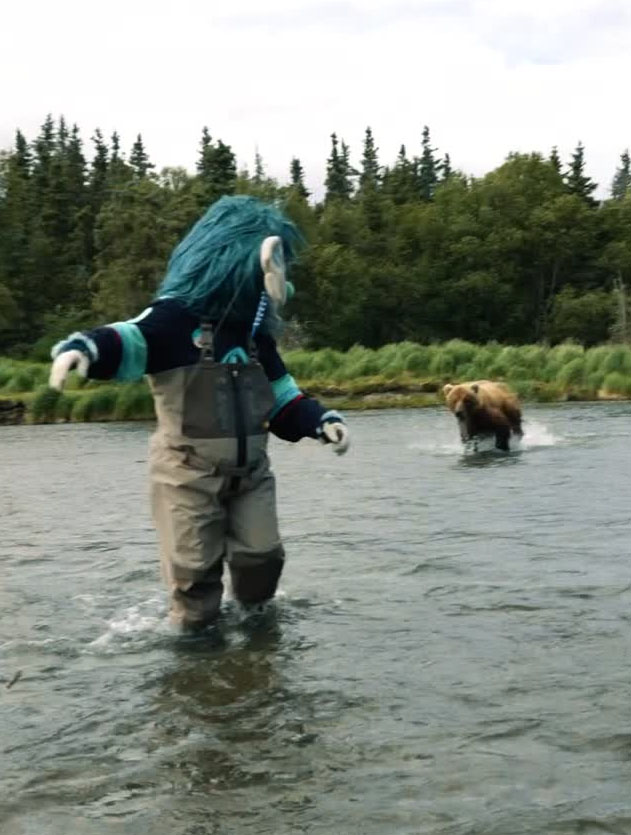
Alaska’s Katmai National Park has a charming livestream that’s a treat to tune into. The rushing water is soothing, you get to see the salmon making their signature upstream leaps, and you’ll see bears depending on the time. (I was staring at one for a while last night that I thought was a rock until the camera zoomed in and the big galumph started moving, rolling onto its back like my dog asking for a belly rub.) Or you might catch a glimpse of an invasive species: the National Hockey League’s own Seattle Kraken, who make a yearly migration up from their native Washington to the 49th state. Last week, the hockey team visited Katmai for a little fly fishing, with even their mascot Buoy the sea troll in tow. Only the fuzzy costume (yes, Buoy donned fly fishing gear over his mascot uniform) sparked some curiosity from a grizzly bear: the bear full-on charged at the strange, blue-haired troll encroaching on his turf! Luckily, no creatures were harmed. And the team captured excellent video of the near-miss.

Kraken center John Hayden talked through the close encounter in the video, saying, “While we were fishing, we had a pretty close call with a couple [of] bears.”

The footage then cut to a shot of Hayden fishing in a stream as the camera panned to the tree cover behind him and showed a brown grizzly bear making its way out of the woods and into the stream.

“We got a bear,” he told the camera, as another crew member said, “Oh, I got to break you off now. Hey Sam, we got a bear, we’ve got to move down.”

Hayden could be seen handing over his fly fishing pole to a crew member as the pair and filming crew began making their way downstream. However, it appeared that the bear wanted to follow them, as he could be seen dipping into the stream and heading in their direction.

At one point, the bear could be seen spotting Buoy the sea troll, who was also fly fishing with the team. The animal let out a roar and then could be seen charging toward the mascot as he hurried to move away.

Luckily, the grizzly bear stopped a few feet away from Buoy in the water. Another angle shot of the bear charging at the Kraken players and filming crew near the end of the video showed just how close the bear got to the team before they got away.

Hayden said in the video that they “got out of it okay,” but it was quite a “close call.” He also noted that the bear likely went after the mascot as it was “pretty interested in his whole look.”

“That last little sprint, I was worried for you Buoy,” a crew member told the mascot, who could be seen shaking his head before the video ended.”

“TROLL NARROWLY ESCAPES BEAR ENCOUNTER,” the team captioned the video. They added, “*no trolls or bears were hurt in the making, always respect wildlife in their natural habitat.”

In response to the video on X, one person noted that they had a similar close call with a “bull moose” while hiking on the side of a mountain. The person noted that despite getting “chased” by the animal they did not get “hurt.”

Another person joked that the bear may have thought Buoy was a friend, writing, “If not friend, why friend shaped?”

The team had been traveling across Alaska for their annual community engagement partnership trip with the Bristol Bay Native Corporation, according to UPI. The trip also included a “Kraken Week” where the team got to work with the Anchorage Hockey Academy’s youth hockey camp, per the outlet.

[From People]

Yikes!! Thank goodness all critters came out safe and unharmed! Naturally, I have questions. For one, why does a team named “Kraken” have a troll for a mascot? That just seems like Mascot & Branding 101. Plus the kraken is such an iconic, evocative image — why wouldn’t you want to give that the puppet character treatment?! It just doesn’t make sense. Is John Oliver available for one more mascot rebrand? Moving along to my next issue: why does the Seattle team do an annual trip across Alaska, instead of, I don’t know, say their home state of Washington? Is that weird, or would it make total sense if I followed hockey more closely? (i.e., at all.) And lastly, bringing the mascot costume along for the ride. While I admire the dedication, why is Buoy out on the water fly fishing?! And what’s it like traveling through airport security with that thing? I realize he wasn’t wearing it on the flight (or was he?!), but I bet it still raised eyebrows, as hairy as the ones adorning the mascot himself. So many questions…

Categories
Animals Nature Penguins Weather

Emperor penguin discovered on the beach after swimming 2k miles to Australia


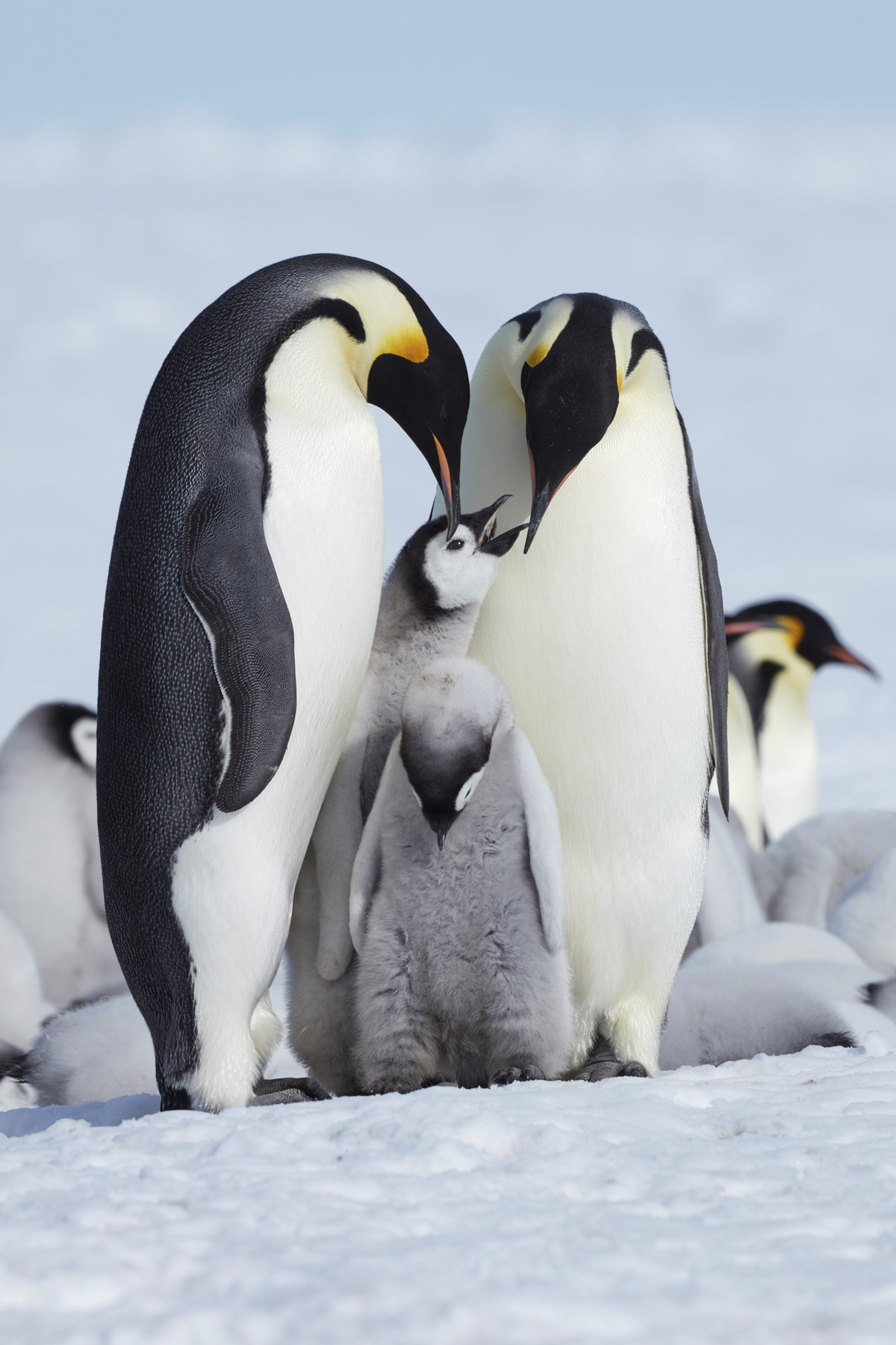
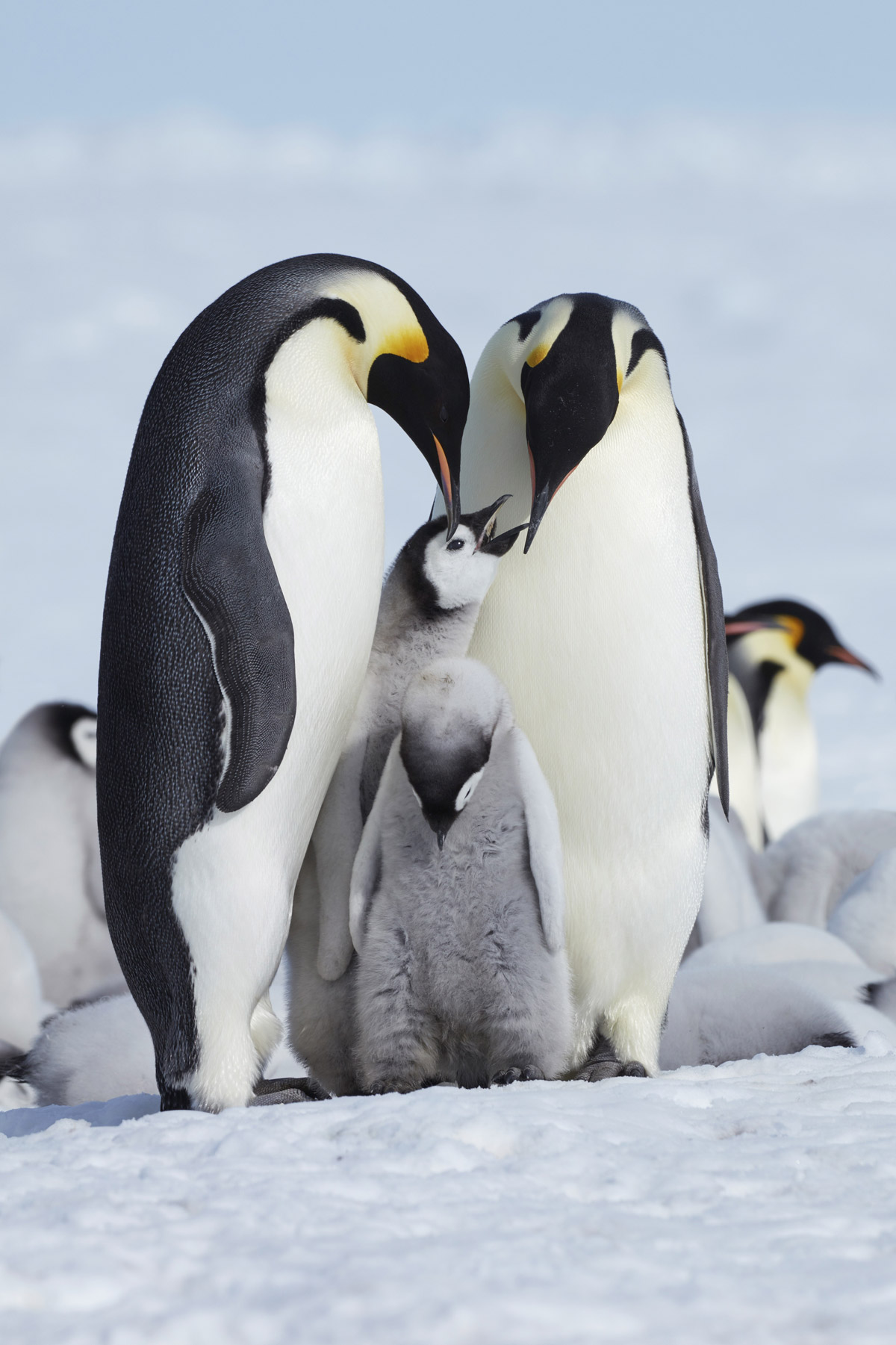
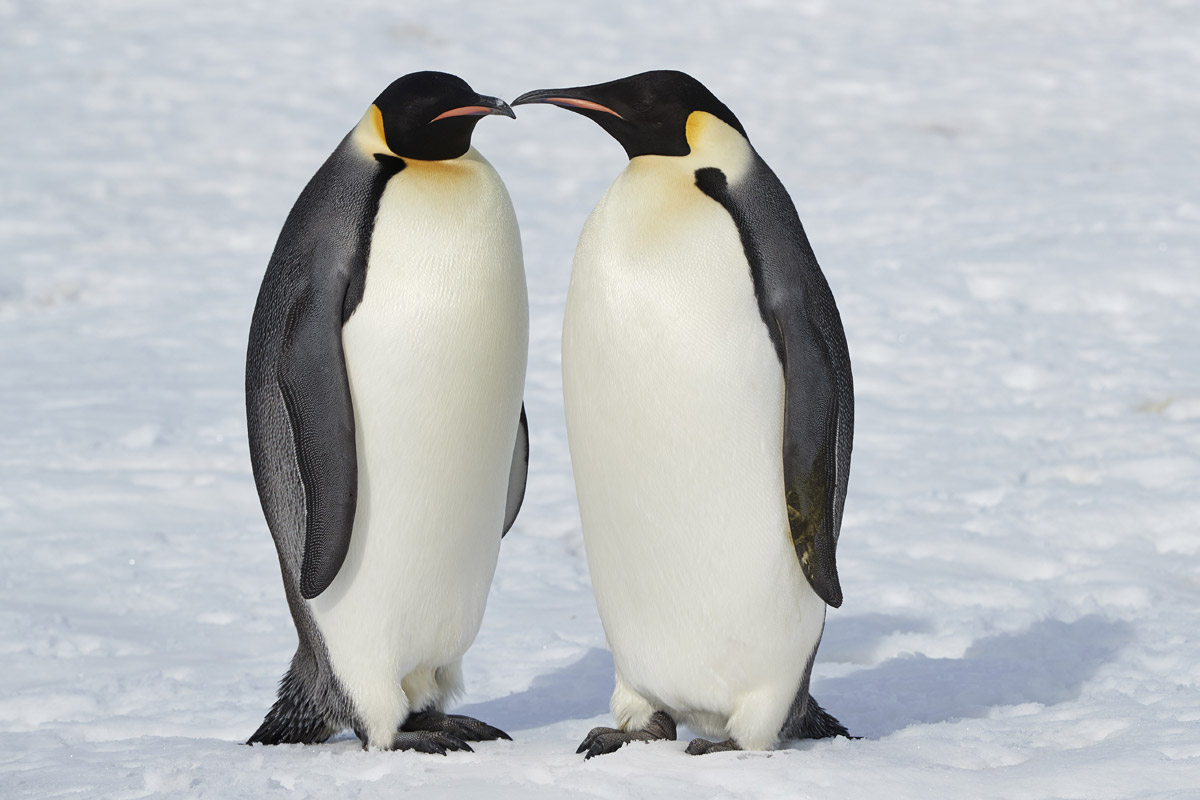
Sometimes you feel the need to move on. Somewhere there’s an ocean, innocent and wild. Somewhere, someone’s calling you, and when the chips are down, you’re just a traveling penguin. As in Gus, the Emperor penguin who just traversed more than 2,000 miles of open ocean from his home in Antarctica to the town of Denmark in Western Australia. Pioneer that he is, Gus became the first Emperor penguin to set foot in Oz when he swam up on November 1, where he was immediately spotted by surfers. So far the long distance swimmer has kept mum on the reason for his journey and how long it took him, but that could be down to the fact that the poor guy is malnourished from such an arduous trek! Gus weighed in at 51 lbs, while adult Emperor penguins are typically closer to 100 lbs. Don’t worry, experts are taking care of the little history-maker (including misting sprays of cold water to mimic his home climate) to get him in good health before they discuss next steps with Gus. From People Mag:

An emperor penguin is in recovery after swimming from Antarctica to Australia — a journey of over 2,000 miles.

The bird was discovered on a tourist beach on the country’s southwest coast on Nov. 1, according to a government statement obtained by the Associated Press.

The lone penguin was first spotted by surfer Aaron Fowler, per the Australian newspaper Albany Advertiser.

“We had a look [at] what was going on and there was this big bird in the water, and we thought it was another sea bird,” Fowler told the outlet, adding, “but then it kept coming closer to the shore — and it was way too big — and it just stood up and waddled right over to us.”

The penguin reportedly weighed only 51 lbs — with 55-100 lbs considered normal for the species.

The bird — which has been nicknamed Gus — is currently under the care of local wildlife experts and is being regularly sprayed with chilled water mist to help him cope with his new, significantly warmer climate.

According to Western Australia state’s Department of Biodiversity, Conservation and Attractions, the goal is to rehabilitate the penguin. Officials are currently unsure whether he will return to Antarctica following his recovery, though “options are still being worked through,” per the AP report.

PEOPLE reached out to Western Australia’s Department of Biodiversity, Conservation and Attractions for further details but did not immediately hear back.

According to the Center for Biological Diversity, a nonprofit that works to secure the future of endangered species, emperor penguins are especially impacted by the effects of global warming due to the melting of ice shelves.

“Scientists project that 80% of the world’s emperor penguins may disappear by the end of the century without drastic cuts in carbon pollution,” the org states. “These penguins are also threatened by ocean acidification and industrial fisheries, which further reduce prey availability.”

[From People]

Yeah, I think we all knew the likely cause of Gus’s pilgrimage would be global warming, just like with our unnamed flamingo friend who toured Cape Cod over the summer. People don’t tend to uproot their lives when everything is hunky dory at home.

Still, I gotta say, penguins really are outdoing themselves this year! We have Pesto the Great, the giant baby King penguin chilling in Melbourne as he receives visiting dignitaries ahead of his fledging — which will dwarf him once Gus gets back in shape. Hey, for all we know Gus popped over to meet Pesto! I’m just glad Gus met surfer Aaron Fowler upon crossing the Australian border, because everything Aaron has said to the media is pure gold. Starting with how Gus emerged from the water: “It was kind of funny, like as he came out of the water he went to do a tummy slide, like I guess he’s used to on the ice, and he just did a kind of faceplant in the sand and shook all the sand off and looked a bit shocked,” to how Gus approached him: “He was not afraid of us at all, I think he might have thought we were penguins because of our wet suits.” Bless you, Aaron. I’m sure that’s exactly what Gus was thinking.

photos credit: Wolfgang Jäkel / ImageBROKER / Avalon

Categories
Animals Nature Weather

A flamingo has been seen on Cape Cod beach, how did it get there?


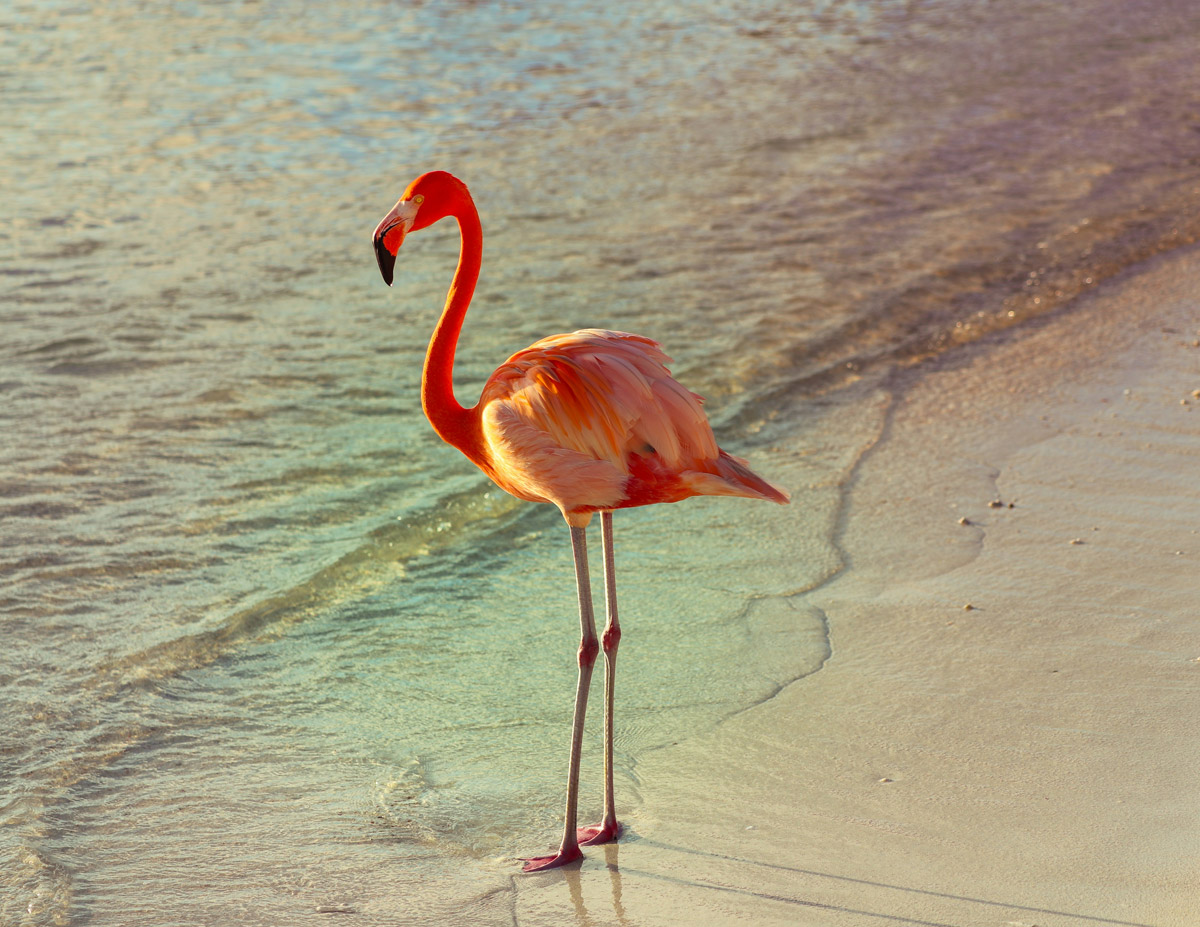
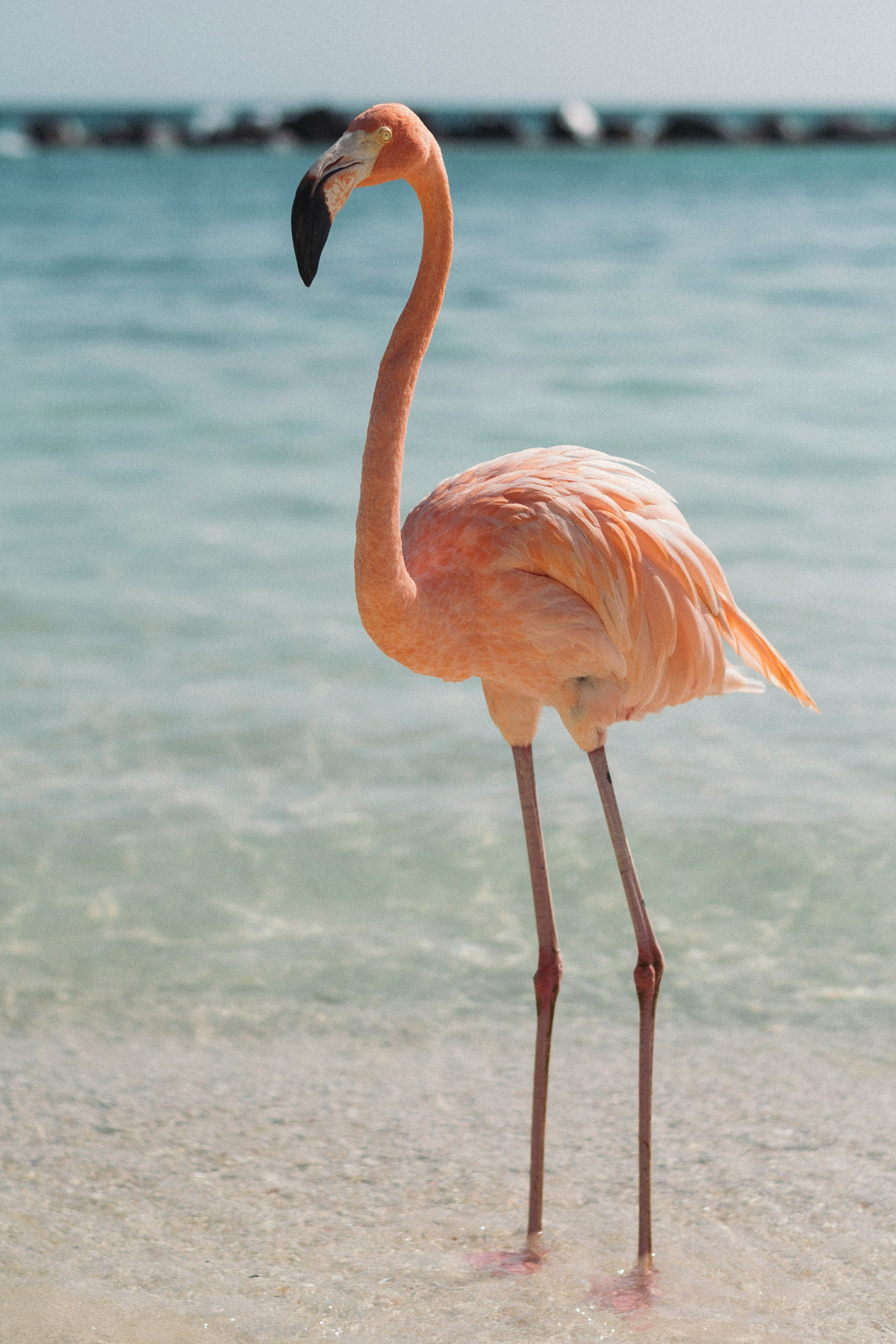
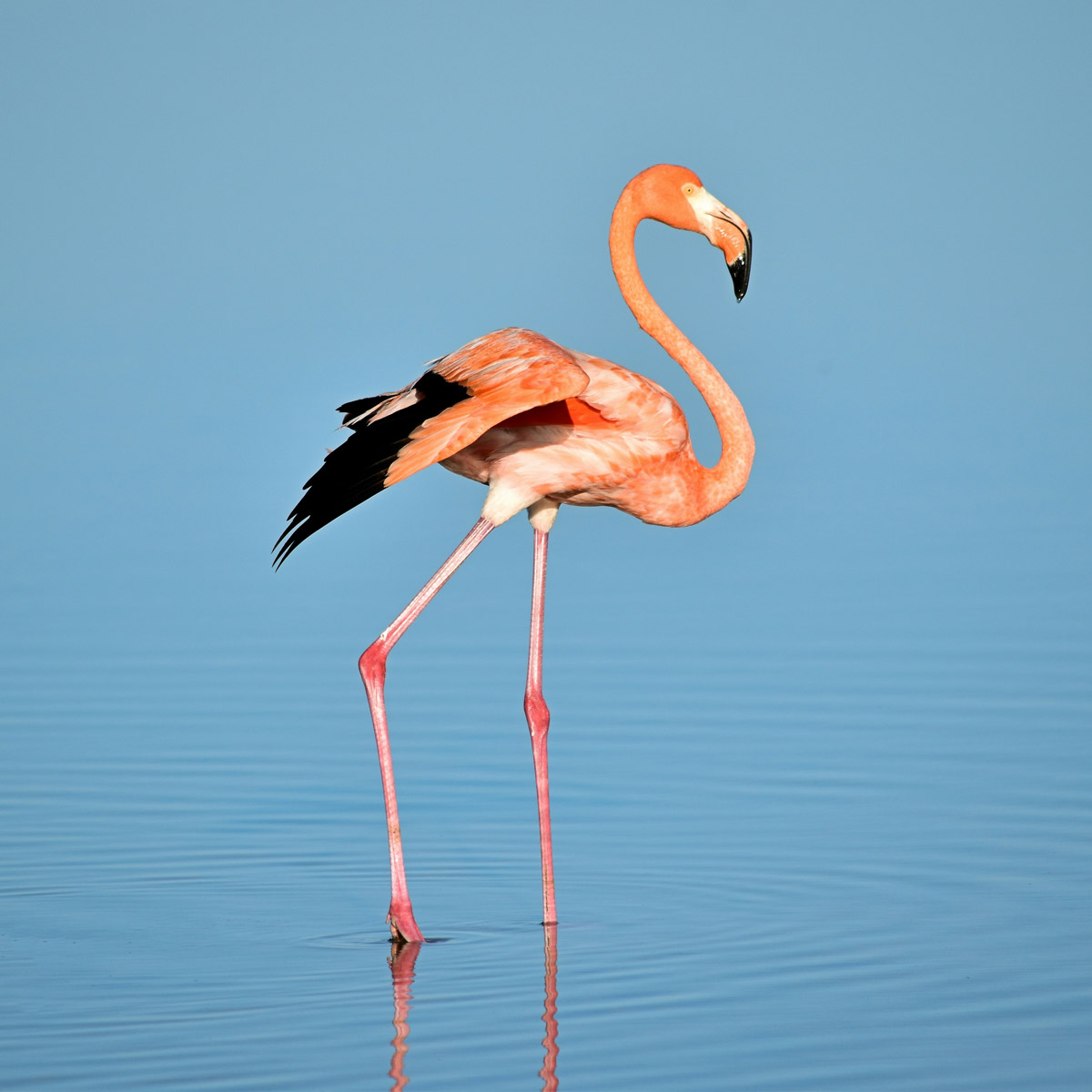
The official term for a flock of flamingos is a “flamboyance,” which I think is simply marvelous. Although I’d be hard pressed to call a lone flamingo anything less than fabulously flamboyant as well. The people of Dennis, Massachusetts, a town in Cape Cod, thought so as well, as locals were stunned by the presence of a flamingo enjoying the sandbar at Chapin Beach last Sunday. How did a flamingo wind up in New England, you ask? Because it was born free, as free as the wind blows! Actually, the most probable explanation is that it got displaced by Hurricane Idalia last August, but maybe that shakeup propelled just the sort of fresh start this bird was craving. Or maybe it was inspired by the intrepid exploits of Thor the Walrus. Heck, maybe someone just needed their alone time from familial wing-flapping. I know I do periodically! ABC News spoke with officers from regional Audubon societies to shed some light on this unique visit:

Unprecedented: If verified as a wild — as opposed to an escaped — bird, the sighting would mark the first time a wild flamingo has been seen in Massachusetts, according to Mark Faherty, the science coordinator for Mass Audubon Cape Cod … who believes this latest sighting to be that of a wild bird that got to Cape Cod on its own. It’s difficult to prove, though Faherty believes the flamingo is the same one spotted on the east end of Long Island, New York, last week, due to the proximity to Cape Cod and the rarity of the bird in the region. “That seems to be the most likely explanation,” he said.

Displacement theory: It’s a bit of a mystery how the bird ended up outside of its native range, though Faherty has one theory. Last year, flocks of flamingos were blown north into parts of the eastern U.S. by Hurricane Idalia almost immediately after it made landfall near Big Bend, Florida, on Aug. 30 — and spotted in states including Virginia, the Carolinas, Kentucky, Texas, Pennsylvania, Ohio, Wisconsin and Florida, where they were once native. The flamboyance phenomenon is a known occurrence with hurricanes that travel up the Gulf of Mexico, Faherty said.

A hurricane refugee? “We know from one bird tracked back in the early 2000s, that when they get displaced like this, they don’t go back home,” Faherty said. “They tend to turn into permanent hurricane refugees and just sort of wander around wherever they end up.” Jerry Lorenz, state director of research for Audubon Florida, told ABC News that he strongly suspects the flamingo got blown from the Yucatan region due to Hurricane Idalia. “I would be willing to bet a great deal of money that that is a bird that came over with Idalia,” he said. If the Cape Cod flamingo is one of those hurricane-blown birds, Faherty said it is “still pretty astounding” that it would have ended up in Massachusetts. “Why did it come all this way to come to Cape Cod now, in June?” he said. “It’s a mystery.”

This is a not so flattering portrait: Lorenz said the “extraordinary” sighting could most likely be due to the bird getting confused and flying in the wrong direction. “Greater flamingos, which is a different species, have been documented to fly 180 degrees the wrong way when they migrate,” he said. “I think that this bird was probably here in Florida and was going, I’m going back to my home in the Yucatan or Cuba or wherever it is and flew in the opposite direction.” Or, it could be that the bird likes it in the north and is exploring, he said. He also said flamingos are “weird birds” and their behavior can be difficult to explain. … Lorenz noted that by restoring Florida’s wetlands, flamingo sightings in northern states could become more commonplace if the birds establish a local population.

[From ABC News]

In response to the fact that flamingos “have been documented to fly 180 degrees the wrong way when they migrate,” here’s what I have to say: when you’re that pretty, you don’t have to be a genius, too. Call it Mother Nature’s version of checks and balances. What, must we really demand that flamingos know where they’re going in addition to being exquisitely pink?! That’s precisely the kind of pressure that could drive a bird to fly off on its own! The poor kids eat with their heads upside down, give ‘em a break.

So instead of name-calling (you’re weird, Mr. Lorenz!) or deriding their sense of direction, why don’t we celebrate this bird’s sense of adventure! The indomitable, fiercely individual spirit to seek the unknown! This flamingo could be a preeminent scientist conducting a comparative study on Long Island vs Cape Cod krill. Take your pick of explanations for how the flamingo found itself up north. Then savor that little reverie before letting the reality sink in that it was uprooted due to a hurricane, which are getting more intense due to climate change.

Stock photos are from Lex Melony, Raoul Croes and Alejandro Contreras on Unsplash

Categories
Jimmy Kimmel Molly McNearney Nature

Jimmy Kimmel had to coax a trapped hawk out of his kitchen, but it was a good omen


A couple of years ago ago, I was chilling outside on my deck at night. When I came in through the sliding glass door to my bedroom, I had things in my hands and I didn’t close it right away. Mr. Rosie was brushing his teeth and called out, “Make sure you close that door so bugs don’t get in!” I rolled my eyes and was like, “Yeah, yeah, let me put this stuff down and I’ll close it. The lights are off, it’s fine for 30 seconds.” Well, those were famous last words because within those 30 seconds, a bird flew into my bedroom. I was surprised to see it flapping around in there. It was clearly surprised to be there. Mr. Rosie was exclaiming, “I TOLD YOU TO CLOSE THE DOOR!” It was a whole scene. Thankfully, we managed to get it out pretty quickly by turning on the outside lights so it could have a beacon, but not before it sh-t on my wall. I kid you not. That was not very fun to clean up.

Poor Jimmy Kimmel had to deal with not one, but two birds inside his house last weekend. The first bird was a hawk that flew into his living room while he and his son Billy were playing video games during Billy’s recovery from his third open heart surgery. The second bird was a dead mourning dove that the hawk had brought in with him “as a little welcome home gift” and dropped on their dining room floor. Jimmy showed the video of him trying to coax the hawk outside on air during his May 29 show and shared a wild story, which gave the dead mourning dove some pretty crazy context.

Jimmy Kimmel and his family had a very eventful holiday weekend. The late-night host opened up about all that went on during Wednesday night’s monologue on Jimmy Kimmel Live, noting that he spent much of the weekend at the Children’s Hospital for his 7-year-old son, Billy’s, third open heart surgery.

“He’s doing very well,” Kimmel noted as the audience cheered.

However, the family also had to contend with some chaos when they returned home on Monday. Kimmel said that an hour after they got home he was playing video games with Billy when the little boy noticed something was wrong.

“He said, ‘Dad, there are two birds in the house!’” Kimmel shared, showing footage of himself in the kitchen with a long broom, trying to coax a hawk out the window.

“It’s OK, Bill, Dad’s gonna get it out,” Kimmel’s wife, Molly McNearney, is heard saying in the clip. But the hawk proves to be a stubborn unwanted guest, flying around the kitchen. Finally, after crashing into another part of the kitchen, sending feathers flying everywhere, the hawk flies out of the window.

Kimmel noted that there was another bird they found dead in the dining room, noting that it had a special connotation for the family.

“I don’t really believe in this kind of stuff, but on the day of Billy’s surgery, my wife saw a mourning dove on the ledge outside his bedroom,” Kimmel shared. “It’s apparently an omen of death, and she was very freaked out by it.”

However, he added, “We get home from the hospital and the hawk flies in and it kills the mourning dove, kills the omen of death!”

[From ET Online]

Oh my goodness, I have no idea what I’d do if an actual hawk brought a dead bird into my home and then refused to leave. I have a small retention pond in my backyard and we have a pair of nesting hawks that will sit on the trees or deck overlooking it in hopes of catching something. I’ve seen them catch and fly away with their meals in their mouths. That’s plenty of up-close “the circle of life” action for me, lol. That video of Jimmy trying to coax it out of his absolutely gorgeous kitchen is a classic. He and his wife, Molly, are both so calm in the face of a bird of prey inside their home, too. At one point, Billy says something that I can’t quite make out, but Molly just goes, ”That word’s not allowed, Billy,” lol.

However, that story that Jimmy tells about his wife seeing a mourning dove on as they were leaving for Billy’s surgery and thinking that it was a bad omen, only to then tie it back to the hawk killing a mourning dove, therefore destroying the bad omen? That is awesome! Great analogy and excellent application of symbolism. I love and totally believe in that stuff. May it truly be a good omen for Billy and their family. You can watch the clip of it in the video below. I cued it up, but just in case, the home video and story start at 51 seconds in.

Photos credit: Avalon.red and screenshots from YouTube

Categories
Animals Nature Parenthood

People are fascinated by the eagle couple fighting over who gets to sit on the eggs


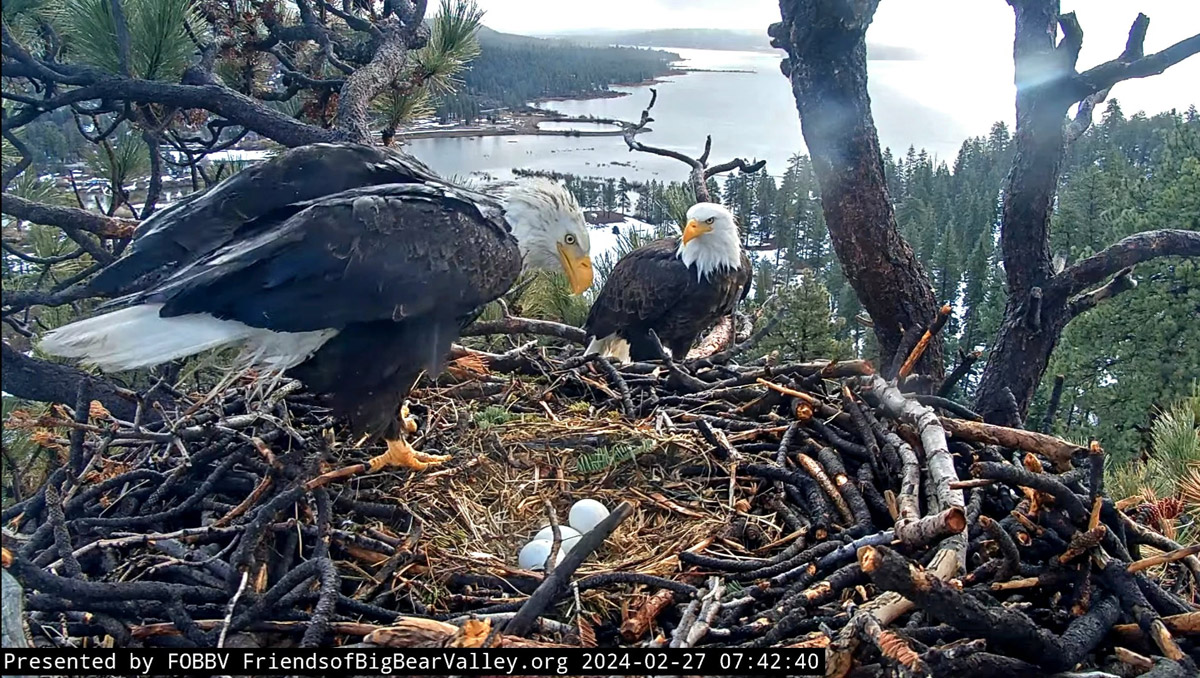
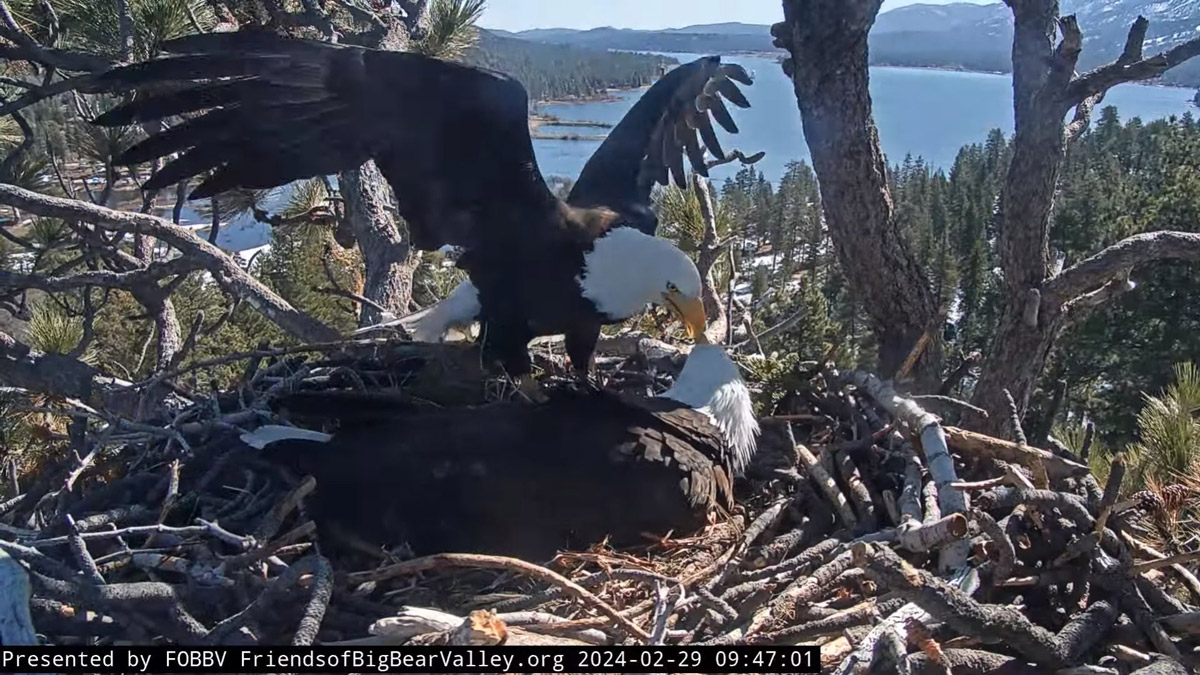
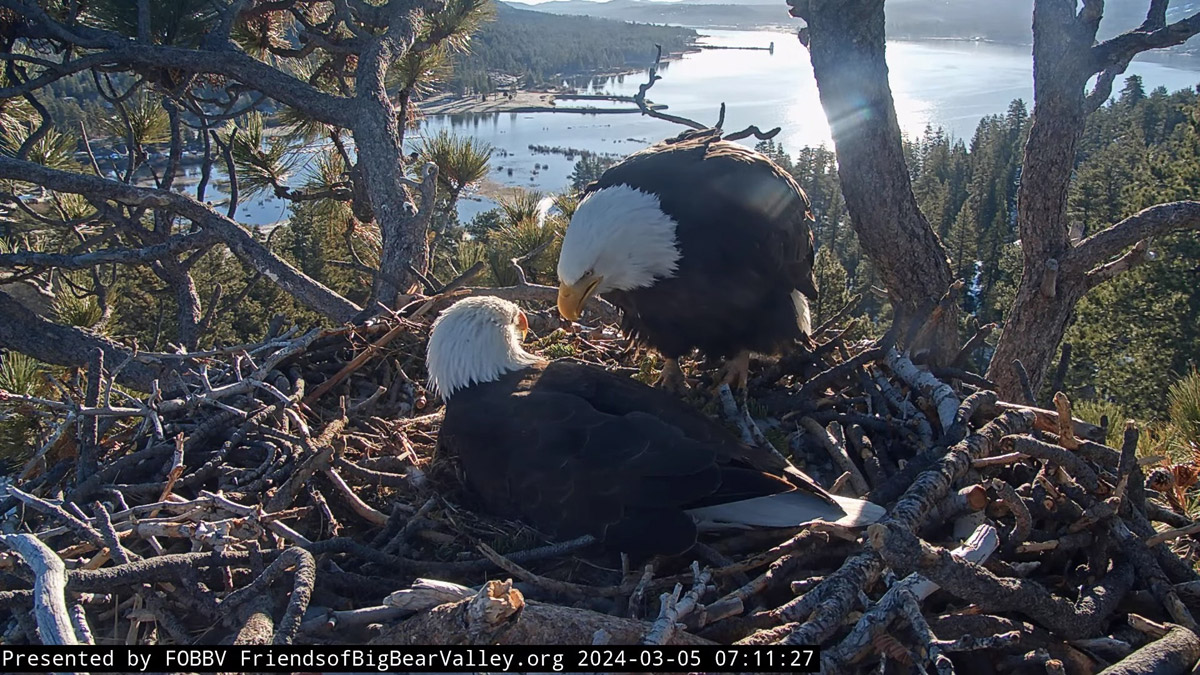
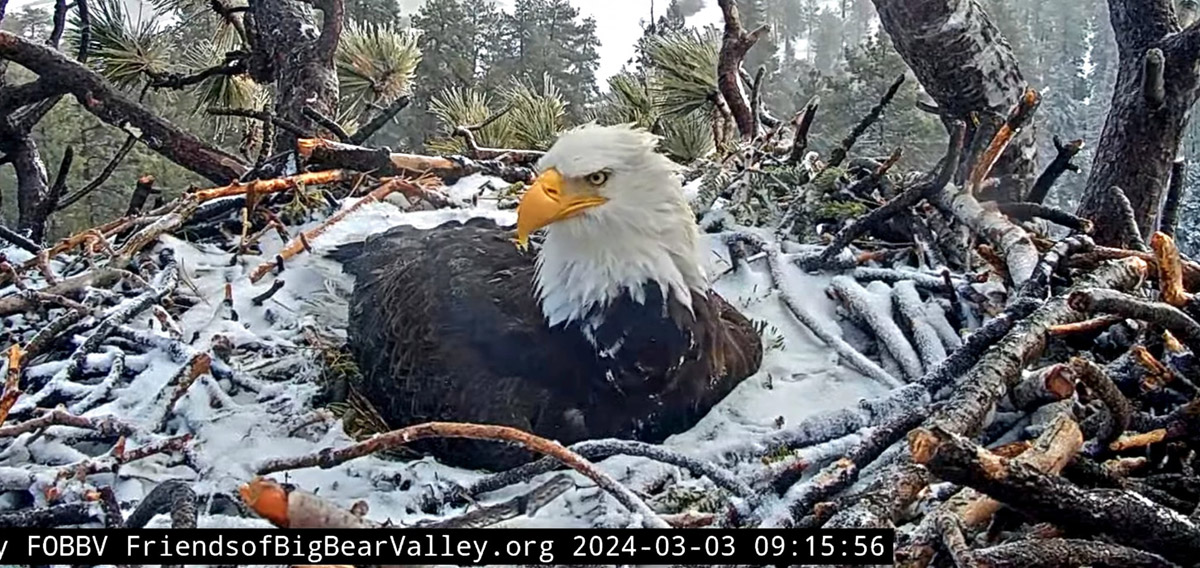
The “Hotel California” lyric pages case may be over, but I’m still here for your eagles coverage fix! Haliaeetus leucocephalus, that is. Meet Jackie and Shadow, American Bald Eagle prospective parents in California, who have captured the hearts of thousands tuning in to their YouTube channel. Conservation group Friends of Big Bear Valley set up a live camera back in the fall of 2021, and recently the main programming has been tracking Jackie as she laid three eggs in late January, and the ensuing pip watch that began a month later. What has really kept viewers returning, though, is how the couple repeatedly fight over who gets to sit on the eggs. May all expecting parents have a partner so dedicated.

“After her full nights on the eggs, Jackie sometimes calls for Shadow in the early dawn. Shadow instantly comes in to take over…but the past few days he has been more stubborn than ever about refusing to leave when Jackie returns,” the organization shared in a Sunday update posted on Facebook.

“On Thursday when Shadow arrived with fluff, Jackie quickly let him take over,” the organization continued. “An hour later, she returned and announced her presence…and Shadow immediately argued.”

Friends of Big Bear Valley noted that the two birds began to fight as Jackie “bit Shadow on the beak” and after a while, he eventually gave in and she took over. From there, the organization joked that the female bald eagle “played hardball” as she refused to leave the eggs for several hours.

However, the two birds fought again the next day over who would keep the eggs safe with Jackie waiting “almost 10 minutes before Shadow would leave” after taking a Friday morning break.

The organization noted that Jackie bit his beak again and “tried gentle beak poking” — both of which were ignored by Shadow — before she finally “had to push her weight around by laying on him to get him to move.”

This continued for the next several days, and the birds’ antics even brought in more than 30,000 viewers, who tuned in to watch the live cam on the nest on Monday, according to KTLA.

Despite all the bickering between the two birds, the organization previously noted in a Feb. 13 Facebook post that it’s all out of love.

“Jackie has been pretty patient and understanding of his love of incubation, so she usually gives him a little extra time on the eggs,” Friends of Big Bear Valley said. “When she thinks ‘okay that’s enough’, she gives a gentle love nibble or nudge, or a sweet beak kiss to soften him up a bit before he gets up and ready to leave. Then, of course, she moves in quickly on the eggs!”

However, the organization said the pair of birds also adhere to a set of rules, including that Jackie is the one who will mainly preside over the nest, especially during harsh weather. During a February storm, Jackie watched over the nest for a whopping 62 hours, according to CBS News.

[From People]

Wow. I can’t think of the last time a man brought me fluff. Take out all the eagle-specific language, and everything Jackie does to keep Shadow in line holds up for our human relationships. Announce your presence? Check. Play hardball? Check. Ultimately win the argument by laying on top of your partner until they move? Check plus. And is it just me, or does “gentle beak poking” sound like something Will and Kate absolutely get up to?

I’ve spent all afternoon pretending to work while watching the live stream of Jackie and Shadow sit on the eggs. In some ways it’s not exactly riveting — a lack of plot will do that — and yet I can’t take my eyes off of them. As of this writing, none of the eggs have hatched and there are serious concerns that it may be too late for Egg 1 (which was laid on January 25). People are so freaked out that Egg 1 has missed the window that the executive director of the organization posted a message last night, urging everyone to take deep breaths and try to remain calm. “Watching nature builds our patience, our strength, our compassion and our resilience.” Gosh I hope there’s some happy news to tweet about soon. I mean sure Jackie and Shadow have their squawks, but they’re good eagles and have been doing everything right to bring their clutch into the world.

photos via Facebook/Friends of Big Bear Valley