Categories
Birds Nature New York City

A parakeet in Central Park joined a flock of sparrows, needs an indoor home for winter


Since the 1960s, Brooklyn’s Green-Wood Cemetery has been the unlikely home of wild monk parakeets. You may be wondering how a flock of seemingly religious parakeets wound up in a nonsectarian cemetery (ok, they’re not really birds of the cloth; they’re so-named because someone thought the signature gray patch on their heads looked like a monk’s cap). The purported answer is a true New York story: a crate of the birds broke open at JFK, presumably upon arrival from the species’ native Argentina. Luckily, the New York climate was close enough to their Andean habitats that monk parakeets were able to survive and thrive and become yet another example of how immigrants enrich America.

For today’s story, though, we’ll be flying north to Manhattan’s Central Park, where a parakeet of a different feather is making news. Named Mei Mei by the birders who have been following her exploits, this parakeet is a budgerigar (budgies for short) who are native to the warmer-climes of Australia. Birders immediately clocked Mei Mei when she showed up in Central Park in late August because, well, it’s hard to miss the neon green ladybird flying with a bunch of brown-colored house sparrows. The sparrows have totally welcomed Mei Mei into their flock, which is adorable! Except Mei Mei isn’t built for the northeast winter rapidly approaching, which is why birders are trying to capture and re-home her.

Mei Mei has been hopping around the Seneca Village area of Central Park near the Upper West Side since at least Aug. 20, when birders theorize she first became lost — whether she escaped from a home, split from a breeder or was intentionally released.

The Budgerigar, also known as Budgies or common parakeets, spent her first days of freedom alone and spent some time with a flock of cowbirds, but it wasn’t long before a group of House Sparrows claimed her as one of their own.

…Unlike their Argentinian-born cousins the monk parakeets that have taken over the Greenwood Cemetery and can be found living wild all over New York City, Budgies are only used to warm weather and do not have enough body fat to survive the Big Apple’s winters.

In her short time out of captivity, Mei Mei has apparently embraced her new life as a free bird — lost parakeets are known to perch on human fingers, even those of strangers, but Mei Mei flees with her new flock every time a person approaches.

She’s even attuned her behavior to match those of the House Sparrows, who do not fly south for the winter, said David Barrett, the brains behind the popular X account Manhattan Bird Alert.

“The Budgerigar survives by eating grass seeds and possibly bugs. She stays safe by foraging with a House Sparrow flock: if one notices danger and flies away, the entire flock will join in flight. This affords protection from birds of prey like hawks or falcons, which are present in the park,” said Barrett.

“This is great for its short-term survival, but it now behaves like a wild bird, and this makes it quite challenging to rescue by ordinary means.”

Mei Mei’s new life has the birding community split, with some celebrating her newfound freedom as symbolic, while others are frantically trying to put her back in a cage.

The Australian birds do not store fat and cannot survive once temperatures drop below 50 degrees, meaning rescuers have just about four weeks to capture Mei Mei and bring her indoors.

Birders are hoping that the impending cold weather will slow Mei Mei down enough so they can finally catch her.

[From NY Post]

Gah, this one’s a real heart-wrencher! On the one hand, Mei Mei has found her chosen family and they’ve welcomed her with open wings. That’s beautiful and should be celebrated and we humans could stand to follow their example! On the other talon — we want Mei Mei to live!! At what cost freedom and living life on your own terms? This isn’t merely the tale of a wayward bird; it’s an existential conundrum! Working in Mei Mei’s favor right now is that NYC temps have been unseasonably warm (but thanks to human-induced climate change, boo hiss). Also, there are a lot of eyes on Mei Mei meticulously tracking her whereabouts, with a confirmed sighting as recent as yesterday. I’m crossing all my feathers for the best possible outcome! Then once that’s settled we can start drafting a script for the Pixar depiction of Mei Mei & the Sparrows.

Birds of a feather…

Central Park’s lost Budgerigar continues to thrive with a flock of Sparrows. It is healthy, flies well, and evades rescue attempts.

Central Park, New York City#birdcpp #birdtwitter #centralpark pic.twitter.com/a3Uqw823AM

— Bagels & Walks (@BagelsAndWalks) September 5, 2025

The Lost Budgerigar continues in Central Park, often near a rock outcropping by West Drive and 83rd Street. She is fine with the slightly cooler weather but will need a rescue when cold arrives. ???? ???? pic.twitter.com/2rg9OWZ1W6

— Manhattan Bird Alert (@BirdCentralPark) October 2, 2025

Categories
Birds Peter Jackson Science

Peter Jackson plans to bring back extinct giant bird species with biotech company


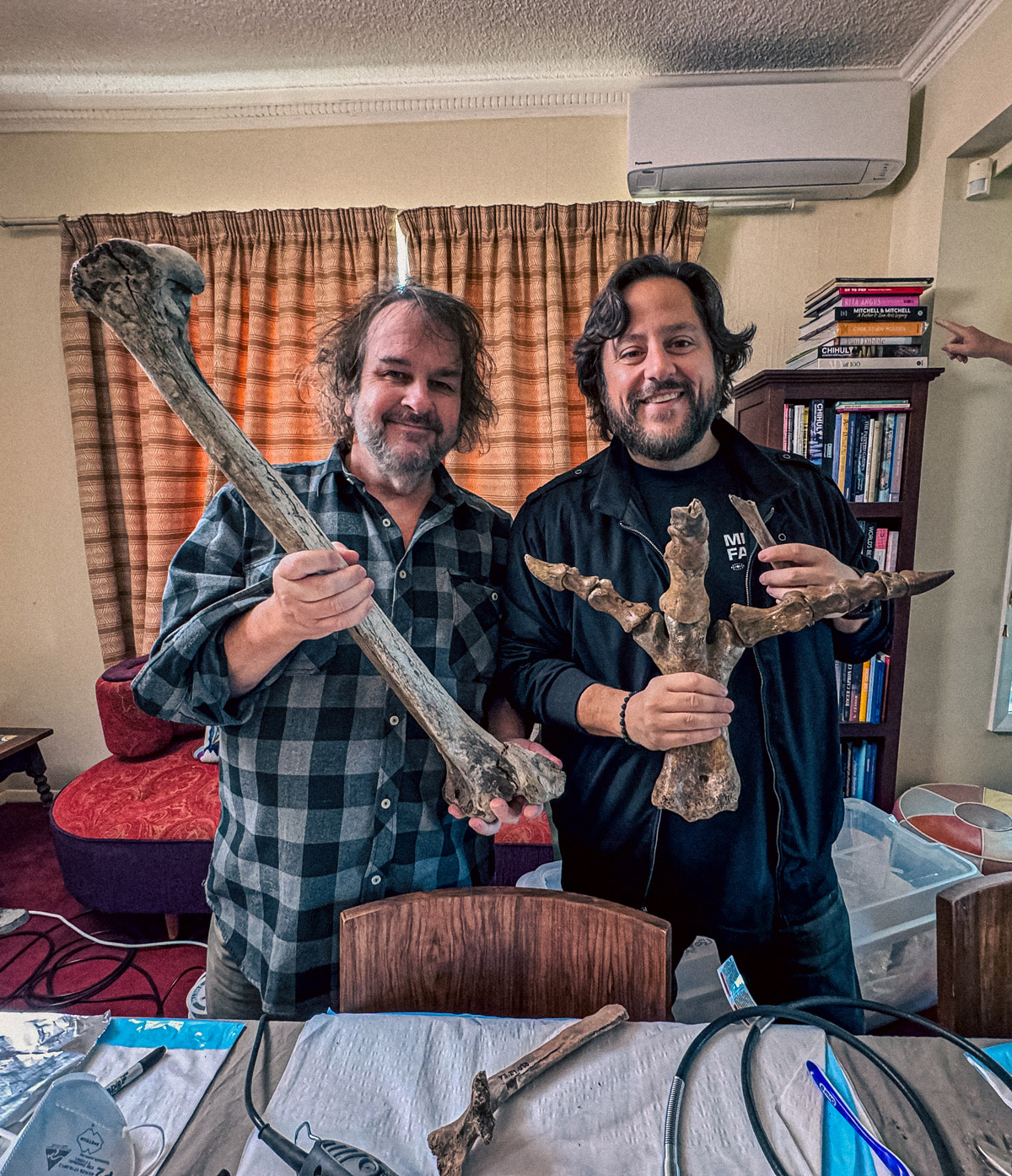
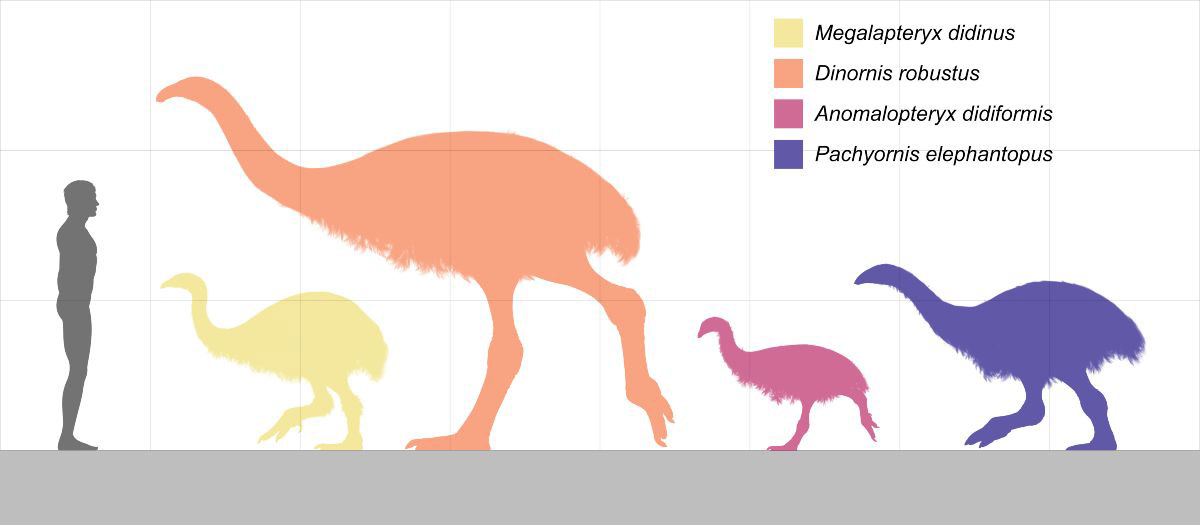
One of the best parts of John Oliver rigging New Zealand’s Bird of the Century contest in 2023 (aside from absolutely everything about it), was getting to see all the fabulously plumed creatures. There’s the kea, kākā, takahe, weka, those frisky kākāpōs (iykyk), Oliver’s winner, the noble pūteketeke, and of course, the kiwi — just to name a few! But one bird wasn’t seen, despite being an emblem of native New Zealand fauna: the moa. Why the shameful snub?! Well, we killed them. Nine species of moa had the run of the islands for thousands of years, ranging in sizes from turkey to 12 feet. So, taller and larger than an ostrich. And like ostriches, the moa were flightless, though one of their unique features was no vestigial wings. Then humans showed up and moa were hunted to extinction within a century… until now? Filmmaker and First Son of New Zealand Peter Jackson has perhaps the largest private collection of moa bones, and he just announced a partnership with Colossal — the biotech company that recently resurrected the dire wolf — to give moa the same de-extinction treatment:

On Tuesday, Colossal Biosciences announced an effort to genetically engineer living birds to resemble the extinct South Island giant moa — which once stood 12 feet (3.6 meters) tall — with $15 million in funding from Jackson and his partner Fran Walsh. The collaboration also includes the New Zealand-based Ngāi Tahu Research Center.

“The movies are my day job, and the moa are my fun thing I do,” said Jackson. “Every New Zealand schoolchild has a fascination with the moa.”

Outside scientists say the idea of bringing back extinct species onto the modern landscape is likely impossible, although it may be feasible to tweak the genes of living animals to have similar physical traits. Scientists have mixed feelings on whether that will be helpful, and some worry that focusing on lost creatures could distract from protecting species that still exist.

The moa had roamed New Zealand for 4,000 years until they became extinct around 600 years ago, mainly because of overhunting. A large skeleton brought to England in the 19th century, now on display at the Yorkshire Museum, prompted international interest in the long-necked bird.

Unlike Colossal’s work with dire wolves, the moa project is in very early stages. It started with a phone call about two years ago after Jackson heard about the company’s efforts to “de-extinct” — or create genetically similar animals to — species like the woolly mammoth and the dire wolf.

Then Jackson put Colossal in touch with experts he’d met through his own moa bone-collecting. At that point, he’d amassed between 300 and 400 bones, he said.

In New Zealand, it’s legal to buy and sell moa bones found on private lands, but not on public conservation areas — nor to export them.

The first stage of the moa project will be to identify well-preserved bones from which it may be possible to extract DNA, said Colossal’s chief scientist Beth Shapiro.

Those DNA sequences will be compared to genomes of living bird species, including the ground-dwelling tinamou and emu, “to figure out what it is that made the moa unique compared to other birds,” she said.

…The direction of the project will be shaped by Māori scholars at the University of Canterbury’s Ngāi Tahu Research Center. Ngāi Tahu archaeologist Kyle Davis, an expert in moa bones, said the work has “really reinvigorated the interest in examining our own traditions and mythology.”

At one of the archaeological sites that Jackson and Davis visited to study moa remains, called Pyramid Valley, there are also antique rock art done by Māori people — some depicting moa before their extinction.

[From HuffPost]

So, these guys are going full steam ahead with genetically engineering not just any extinct moa, but the giant 12-foot-tall/500 pound variety. Have they learned NOTHING from Jurassic Park?! Cause unlike the dire wolf, with moa we’re talking about birds, who we know are the descendants of dinosaurs. And again, not just any bird, but the giant freakin’ moa, who looks like an apatosaurus on stilts! Heck, the giant moa’s scientific name is even Dinornis robustus! Am I the only one who feels like we’re gleefully careening into a Greek tragedy about hubris?! All right, I’ll get off my shrill soap box now. But I’m not the only one with concerns; the full article includes quotes from scientists (not working on the project, obviously) raising practical questions like, where will these franken-moa creatures live after being hatched in the lab? And should we really be de-extincting animals when we, um, don’t exactly have a secure hold on current species surviving what we’ve already wrought on this planet? To what end is this application of genetic science useful?

Embed from Getty Images

Photos credit: User PaleoNeolitic on Wikipedia, Colossal Biosciences/Cover Images, Getty

Categories
Birds Contests New York City

NYC hosts first Pigeon Fest, that included a Pigeon Impersonation Pageant


The official Aves of New York State may be the Eastern Bluebird, but the undeniable bird of New York City is the pigeon. They are New Yorkers through and through, and last week the city’s Homo sapiens turned out to celebrate their Columba livia compatriots. Stewards of the West Side’s High Line Park said the idea came after they noticed an uptick in visitors coming to see “Dinosaur,” a 16-foot sculpture of, yes, a pigeon, that had been installed last October. And so Pigeon Fest was born. Organizers called it a one-off event, but I wouldn’t be surprised if it ends up becoming an annual party. After all, a big flock of fans showed up on a rainy day for arts & crafts, games, education, and perhaps most fabulous of all: a Pigeon Impersonation Pageant.

A panoply of pigeonry: A woman with pigeon earrings waited in line to get her face painted. At a nearby table, children crafted pigeon piñatas and drew on pigeon postcards. Representatives from NYC Bird Alliance and the Wild Bird Fund handed out informational fliers. A line formed in front of carnival-inspired games like Pin the Tail on the Pigeon and Ring-A-Wing in which players tried to land a plastic ring on a pigeon silhouette.

The sculpture that started it all: “New Yorkers have opinions about everything, but they seem to really be flocking to this particular sculpture,” Alan van Capelle, Executive Director of the High Line said. “And we thought, why not have a festival celebrating all things pigeon?” Sharing van Capelle’s enthusiasm is Iván Argote, the Colombian artist and film director behind “Dinosaur.” … “I think the sculpture talks a lot to New Yorkers because I think New Yorkers can understand very well this feeling of the funky and the strange,” Argote said.

Showing off their feathers: The pageant included seven impersonators, each judged on their pigeon-ness based on four qualifications: plumage, strut, sound and stage presence. The panel of judges included Argote and a representative of Cornell’s Ornithology Lab. Each pigeon brought their personality to the stage. One contestant donned a top hat for their look and laid an egg on-stage, while another wore a white feathery look with ornate gloves. Songs like Frank Sinatra’s “Fly Me to the Moon” and Nelly Furtado’s “I’m Like a Bird” played in the background while the contestants strutted their stuff. The crowd cheered and applauded as contestants took away pigeon-shaped gold trophies.

‘Turning out for the pigeons’: At the end of the pageant, the High Line staff cleared the stage, prepping for a much different but deeply important event: a panel on building bird-friendly cities. Panelists included Qiana Mickie, executive director of the Mayor’s Office of Urban Agriculture, and Christian Cooper, a science writer and birding advocate. Attending this panel was Margaret Lee, a resident of New York City who has been a long-time pigeon lover. Every day, Lee walks a mile-long loop around her apartment to feed several flocks of pigeons around Downtown Manhattan. For Lee, hearing from experts like Mickie and Cooper is an important part of Pigeon Fest. “I’m hanging out primarily here for the compassionate leaders that I am hoping for,” Lee told Time Out. “It’s amazing to see so many people turning out for the pigeons.”

[From Time Out]

You guys, they got an Ivy League ornithology expert to judge a contest — of humans dressed as pigeons. Words cannot begin to convey the depths of my love for this. The earnestness, the zeal, the creativity! Not to mention the areas of criteria: plumage, strut, sound and stage presence. This whole festival is such a fun intersection of science, ingenuity, and New York. Come on, High Line, you have to bring this back next year! And keep it in June because I do believe this pageant belongs in Pride Month. In the meantime, we can still enjoy “Dinosaur,” the artwork that started it all. Artist Iván Argote said of his work, “The name ‘Dinosaur’ makes reference to the sculpture’s scale and to the pigeon’s ancestors who millions of years ago dominated the globe, as we humans do today.” Nerd that I am, I chuckled heartily at the name. Though I must admit, it wasn’t until I took a science course in college to fulfill a degree requirement that I first learned birds were the descendants of dinosaurs. It blew. My. MIND!