

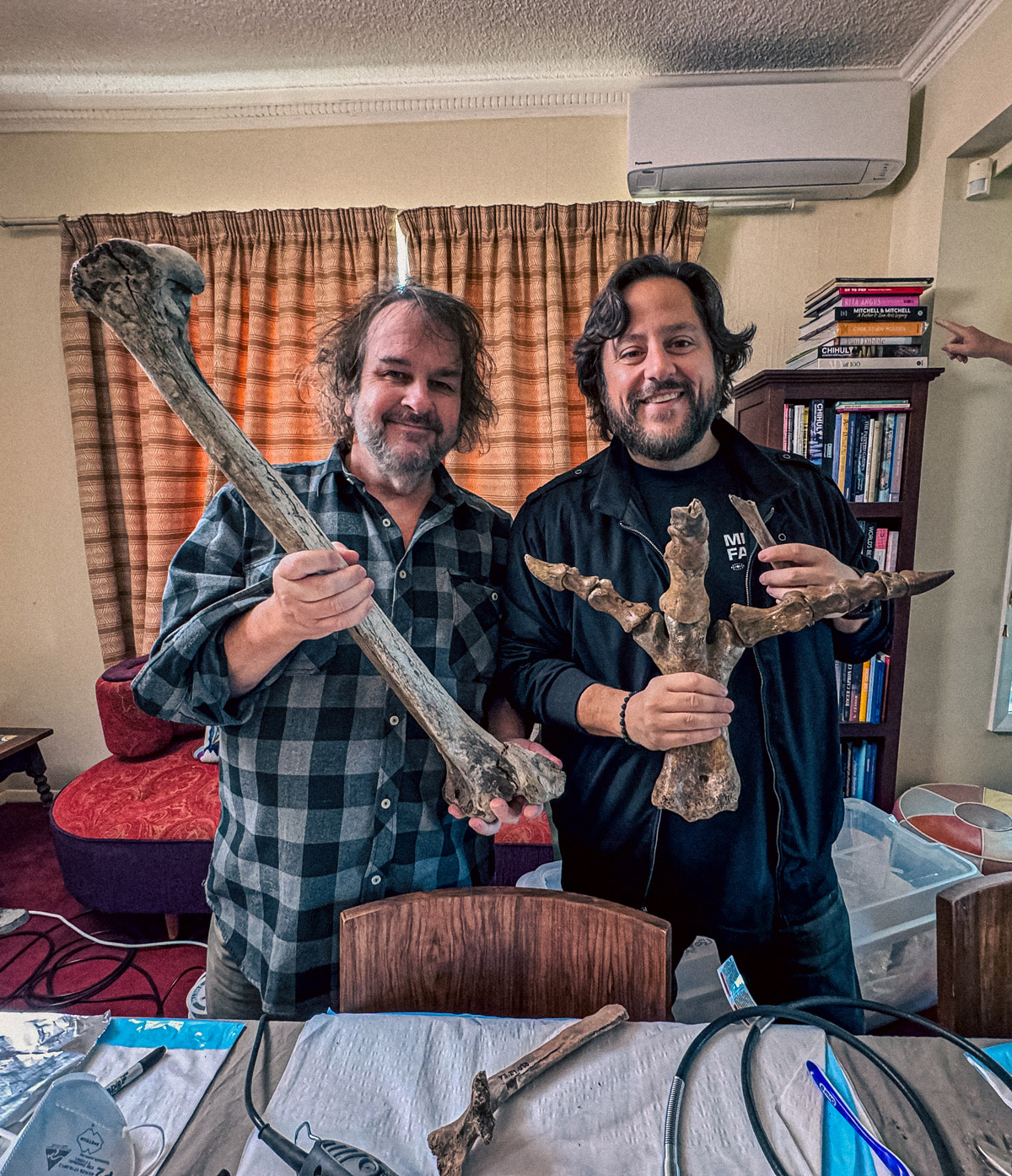
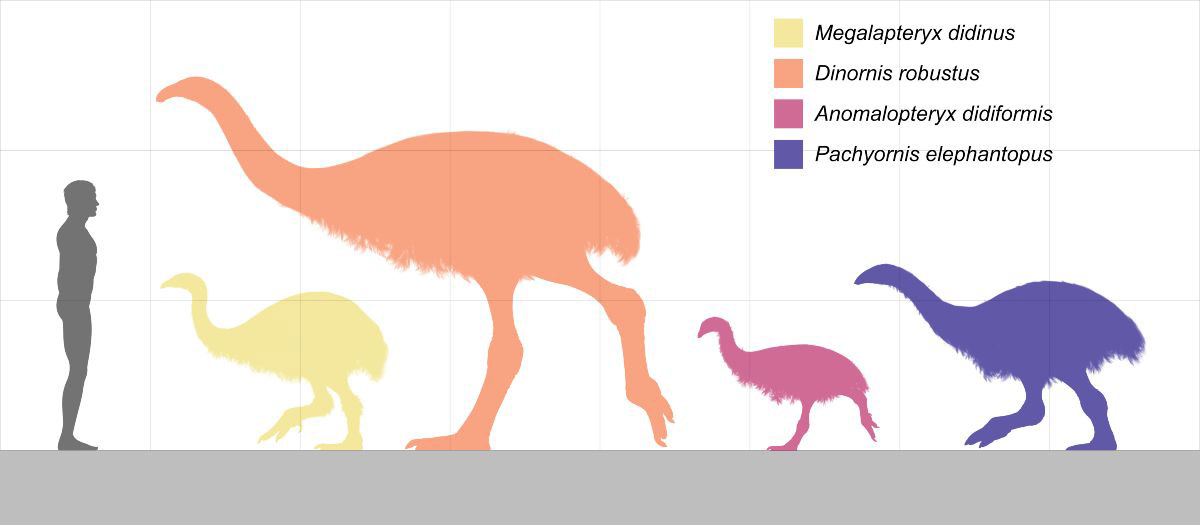
One of the best parts of John Oliver rigging New Zealand’s Bird of the Century contest in 2023 (aside from absolutely everything about it), was getting to see all the fabulously plumed creatures. There’s the kea, kākā, takahe, weka, those frisky kākāpōs (iykyk), Oliver’s winner, the noble pūteketeke, and of course, the kiwi — just to name a few! But one bird wasn’t seen, despite being an emblem of native New Zealand fauna: the moa. Why the shameful snub?! Well, we killed them. Nine species of moa had the run of the islands for thousands of years, ranging in sizes from turkey to 12 feet. So, taller and larger than an ostrich. And like ostriches, the moa were flightless, though one of their unique features was no vestigial wings. Then humans showed up and moa were hunted to extinction within a century… until now? Filmmaker and First Son of New Zealand Peter Jackson has perhaps the largest private collection of moa bones, and he just announced a partnership with Colossal — the biotech company that recently resurrected the dire wolf — to give moa the same de-extinction treatment:
On Tuesday, Colossal Biosciences announced an effort to genetically engineer living birds to resemble the extinct South Island giant moa — which once stood 12 feet (3.6 meters) tall — with $15 million in funding from Jackson and his partner Fran Walsh. The collaboration also includes the New Zealand-based Ngāi Tahu Research Center.
“The movies are my day job, and the moa are my fun thing I do,” said Jackson. “Every New Zealand schoolchild has a fascination with the moa.”
Outside scientists say the idea of bringing back extinct species onto the modern landscape is likely impossible, although it may be feasible to tweak the genes of living animals to have similar physical traits. Scientists have mixed feelings on whether that will be helpful, and some worry that focusing on lost creatures could distract from protecting species that still exist.
The moa had roamed New Zealand for 4,000 years until they became extinct around 600 years ago, mainly because of overhunting. A large skeleton brought to England in the 19th century, now on display at the Yorkshire Museum, prompted international interest in the long-necked bird.
Unlike Colossal’s work with dire wolves, the moa project is in very early stages. It started with a phone call about two years ago after Jackson heard about the company’s efforts to “de-extinct” — or create genetically similar animals to — species like the woolly mammoth and the dire wolf.
Then Jackson put Colossal in touch with experts he’d met through his own moa bone-collecting. At that point, he’d amassed between 300 and 400 bones, he said.
In New Zealand, it’s legal to buy and sell moa bones found on private lands, but not on public conservation areas — nor to export them.
The first stage of the moa project will be to identify well-preserved bones from which it may be possible to extract DNA, said Colossal’s chief scientist Beth Shapiro.
Those DNA sequences will be compared to genomes of living bird species, including the ground-dwelling tinamou and emu, “to figure out what it is that made the moa unique compared to other birds,” she said.
…The direction of the project will be shaped by Māori scholars at the University of Canterbury’s Ngāi Tahu Research Center. Ngāi Tahu archaeologist Kyle Davis, an expert in moa bones, said the work has “really reinvigorated the interest in examining our own traditions and mythology.”
At one of the archaeological sites that Jackson and Davis visited to study moa remains, called Pyramid Valley, there are also antique rock art done by Māori people — some depicting moa before their extinction.
So, these guys are going full steam ahead with genetically engineering not just any extinct moa, but the giant 12-foot-tall/500 pound variety. Have they learned NOTHING from Jurassic Park?! Cause unlike the dire wolf, with moa we’re talking about birds, who we know are the descendants of dinosaurs. And again, not just any bird, but the giant freakin’ moa, who looks like an apatosaurus on stilts! Heck, the giant moa’s scientific name is even Dinornis robustus! Am I the only one who feels like we’re gleefully careening into a Greek tragedy about hubris?! All right, I’ll get off my shrill soap box now. But I’m not the only one with concerns; the full article includes quotes from scientists (not working on the project, obviously) raising practical questions like, where will these franken-moa creatures live after being hatched in the lab? And should we really be de-extincting animals when we, um, don’t exactly have a secure hold on current species surviving what we’ve already wrought on this planet? To what end is this application of genetic science useful?
Photos credit: User PaleoNeolitic on Wikipedia, Colossal Biosciences/Cover Images, Getty