

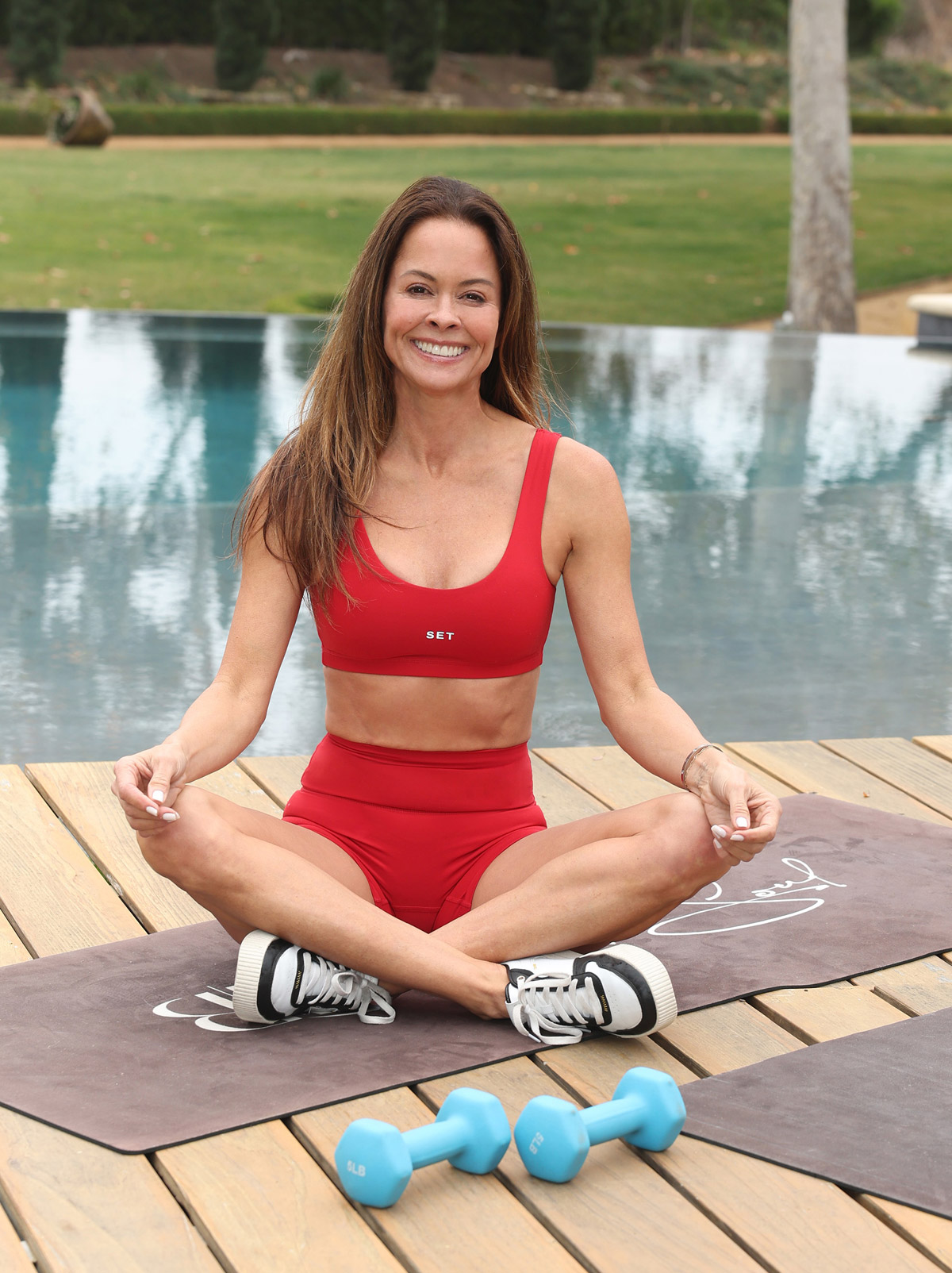
Last summer, we talked about how Brooke Burke was promoting strength training for women of a certain age. Having just turned 40, I appreciated the comments that you were doing strength training and loving it. Well, I’ve got some good news for you! A new study out of Brigham Young University found that 90 minutes of strength training per week can take four years off of your biological age. There were 5,000 participants, all between 20-69 years old.
The science behind it: For the study, researchers looked at the length of the participants’ telomeres, which are protective DNA caps at the ends of chromosomes, through blood testing. (Telomeres help prevent your DNA from getting damaged, among other things, and are usually measured in biological aging.) The participants were also asked how often they worked out, including how often they did strength training. Ultimately, the researchers discovered that doing 90 minutes a week of strength training was linked with nearly four years less biological aging. Meaning, if you did 180 minutes a week of strength training, you could cut your biological age by up to eight years.
The takeaways: The findings actually line up well with current exercise guidelines in the U.S. The current Physical Activity Guidelines for Americans recommend that adults get at least 150 minutes of moderate-intensity physical activity a week, with at least two days of muscle-strengthening activity in the mix weekly.
The link with aging: The researchers broke it down in the study, noting that strength training “mitigates some of the damage caused by such chronic diseases, reversing muscle loss, raising resting metabolic rate, promoting fat loss, and improving cardiovascular health.” As a result, it may “limit disease and slow the aging of cells.”
Easy ways to start strength training: “You don’t need weights beyond body weight to start strength training,” Matheny says. “Start with body weight stuff.” He suggests starting your routine by focusing on larger muscle groups, like your legs and glutes. That means doing things like lunges, squats, walking lunges, step-ups, and step-back lunges. “Those are the easiest things to do that recruit large muscle groups,” he says.
Upper body work: To work your upper body, try push-ups and pull-ups. “For push-ups, you can start with a plank—that is strength training,” Matheny says. You can do kneeling push-ups if a full push-up feels like too much. “For pull-ups you can use a band [for assistance] and work your way up,” he says. To challenge yourself, simply add more reps, step higher, or use less aids to get the full body resistance, Matheny says. “When you’ve tapped out on that, start adding some weights. Then, ideally, you get to the gym.”
This is awesome news. We’re always being told the things that take years off of our life, but it’s cool to get actual scientific confirmation. I’ve heard trainers and instructors say that push-ups and planks are the best exercises you can do for full-body strength. They always say, “Great core workout!” From the results I’ve gotten, I believed them, but now it makes sense as to why they’re so good for you. I love knowing the actual science behind claims like this. I find it so motivating to know the “how” in addition to the “why.” Exercise in general is great for mental health as well. Endorphins, baby! Last summer, I was trying to switch from my decades-long cardio heavy workout routines to put more of a focus on strength training. I’ve taken Pure Barre classes on and off since 2011, but my bank account needed a break, so I was doing E2M circuits, Apple Fitness , and YouTube videos. I did well for a while but fell out of it around the holidays. I need to get back on the horse.

Photos credit: Jesse Bauer/startraksphoto.com, Sophie Fritz/startraksphoto.com and via Instagram