
There’s a new political book getting headlines in the UK. It’s called Get In by Patrick Maguire & Gabriel Pogrund, and it’s called “the definitive account” of how Keir Starmer finagled his way into Downing Street, ending fourteen years of Tory rule. One of Starmer’s key allies is a woman named Angela Rayner. She serves as Deputy Prime Minister, and there’s a story about Rayner which is getting a lot of attention. When QEII died, Liz Truss and the Tories were still in charge, and Labour was still advising the monarchy. Rayner was insistent on one thing: that Prince Andrew should never be included in any updated counsellors-of-state lists, as in who would and could be deputized for King Charles if he was out of the country or incapacitated. The drama, at the time, was that Prince Harry was still on the list. But Rayner’s issue was that Prince Andrew was still included on the list. From the Times’ excerpt of this book:
All but one aspect of the royal succession had been settled immediately: who would now deputise for the King, giving assent to legislation and representing him officially at state functions, if he were abroad or incapacitated? The Regency Acts of 1937 and 1953 decreed that the sovereign’s spouse and the next four adult royals in line to the throne would serve as counsellors of state: Camilla, now Queen, Prince William, Prince Harry, Prince Andrew and Princess Beatrice.
The press made much of the inclusion of Harry, brooding in Californian exile. But Rayner, who was the opposition’s Commons spokeswoman on questions relating to the constitution, was more exercised by Andrew. His desire to play an active role in public life was undimmed by allegations — which he has always denied — that he sexually abused a 17-year-old, his payment of a £12 million settlement to his accuser or the ongoing taint of his long association with Jeffrey Epstein, one of the world’s most notorious paedophiles.
Rayner thought that an outrage. “She was very actively reaching out to the Palace, the upper echelons of the civil service,” an adviser recalled, “and said she thought this was a huge problem, and that the government needed to address this, and that she would offer cross-party support to make sure it happened. That’s — to be stereotypical — her working-class view. She’s not anti-monarchist, but she doesn’t like a paedo.”
In those discussions, she offered the empathy of a mother who knew what it meant to raise a complicated family. Her message, according to her adviser, was: “I know how difficult it is to be in a big, dysfunctional family where you’ve got the black sheep, they’re really damaging to the rest of you but they’re still in your family.” She nonetheless advocated excluding Andrew from royal duties entirely.
That nuclear option proved too much for the Palace and Downing Street to take. Together with the cabinet secretary, the King’s private secretary Clive Alderton alighted on a diplomatic fix: the list would be expanded to include Princess Anne and Prince Edward, so that neither Harry nor Andrew would ever be required to act on the King’s behalf.
Doing so still required new legislation, setting in train an intricate waltz between royalty, government and parliament. Rayner would be required to deliver a statement on the new settlement on behalf of the opposition. Extending the list to add new counsellors of state, however strongly she agreed with the intended effect, would require her implicit endorsement of the existing cohort. That proved too much. With negotiations ongoing she walked indignantly into her office and told her team: “I’m not going to vote to keep that nonce on … I can’t go back to my constituency and say, yeah, I support that.”
After the deep state learnt of her disquiet, Rayner was summoned for a Zoom meeting with Simon Case, the cabinet secretary and former courtier to Prince William. She made her point with no less force but emerged from the meeting chastened. “After that conversation, she went quiet,” an adviser said. “She never, ever spoke about the royals like that again.”
I don’t understand why the palace and Downing Street were so reluctant to simply jettison Andrew from the counsellors of state list? They ended up having to update the rules or whatever anyway so that Princess Anne could be added, so why not take the opportunity to slash Andrew from the list as well? And if they wanted to take Harry off the list – which has been the longtime obsession of the British tabloids – just do that too. Who cares? It’s not like people are ever going to forget Andrew’s nonce grossness or “the accusations.” Instead, it looks like the government and the monarchy bends over backwards to enable Andrew’s delusions of relevancy. The Simon Case part of the story is fascinating too – basically, Prince William’s Tory handler threatened Rayner and she shut up about Andrew forever.
Photos courtesy of Avalon Red.
-
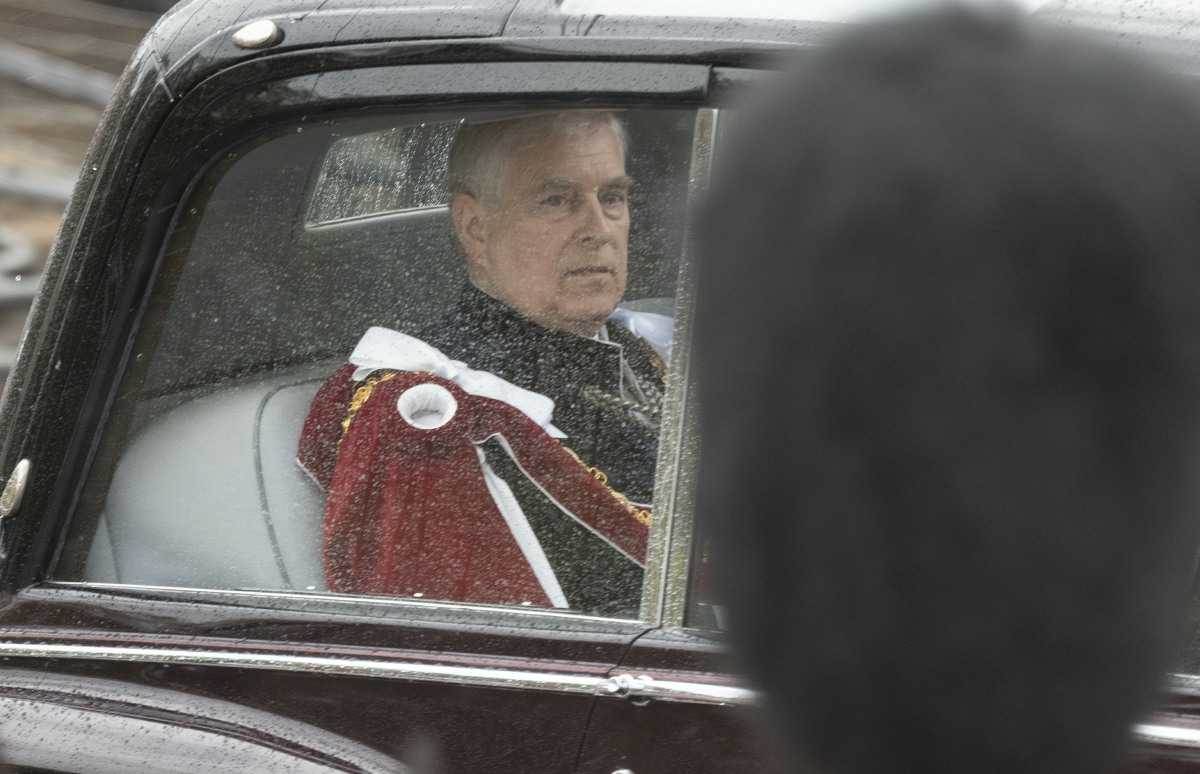
- Queen Victoria Memorial, London, UK. 6 May 2023. Prince Andrew returns to Buckingham Palace in a car along The Mall, after leaving the Coronation Service in Westminster Abbey.,Image: 774237297, License: Rights-managed, Restrictions: , Model Release: no, Credit line: MALCOLM PARK/Avalon/Avalon
-
- Prince Andrew during the Coronation of King Charles III, London, United Kingdom, on 06 May 2023.,Image: 774246957, License: Rights-managed, Restrictions: -, *** NO UK USE FOR 48 HRS ***, Model Release: no, Credit line: PIC PAUL GROVER FOR THE TELEGRAPH/Avalon/Avalon
-
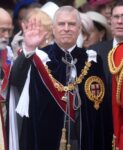
- Duke of York, Prince Andrew, at The Coronation of King Charles III at London”s Westminster Abbey 06 May 2023,Image: 774252265, License: Rights-managed, Restrictions: -, Model Release: no, Credit line: Mark Stewart / Avalon
-
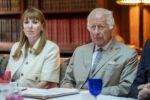
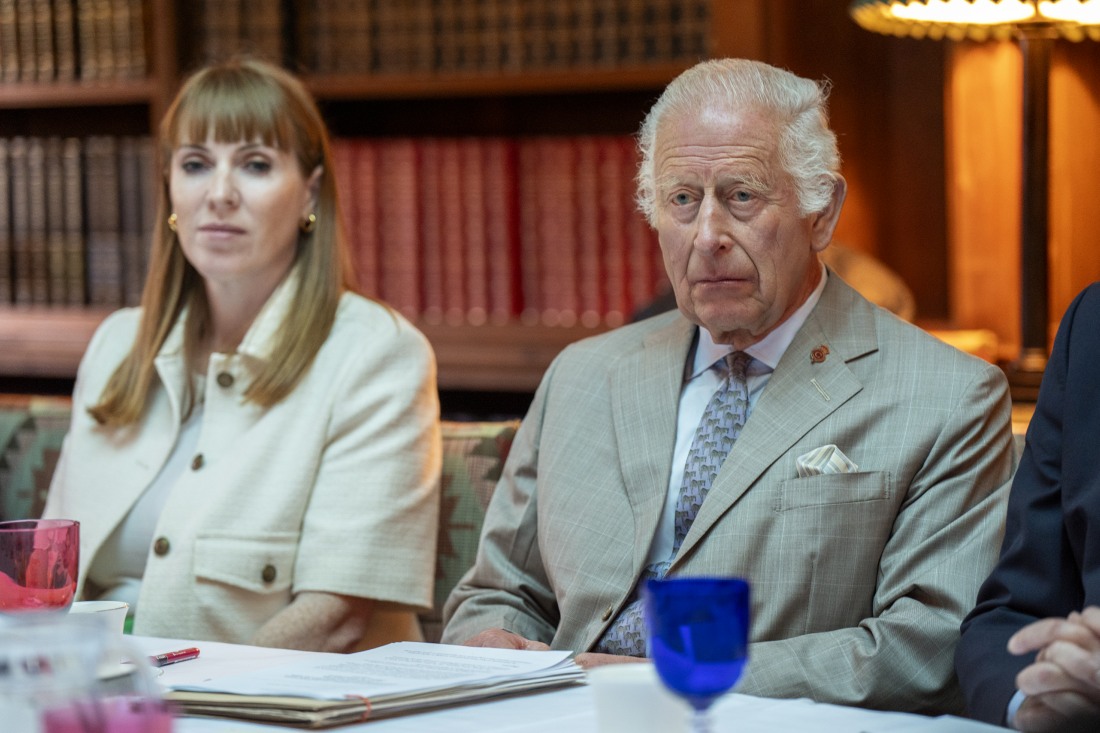
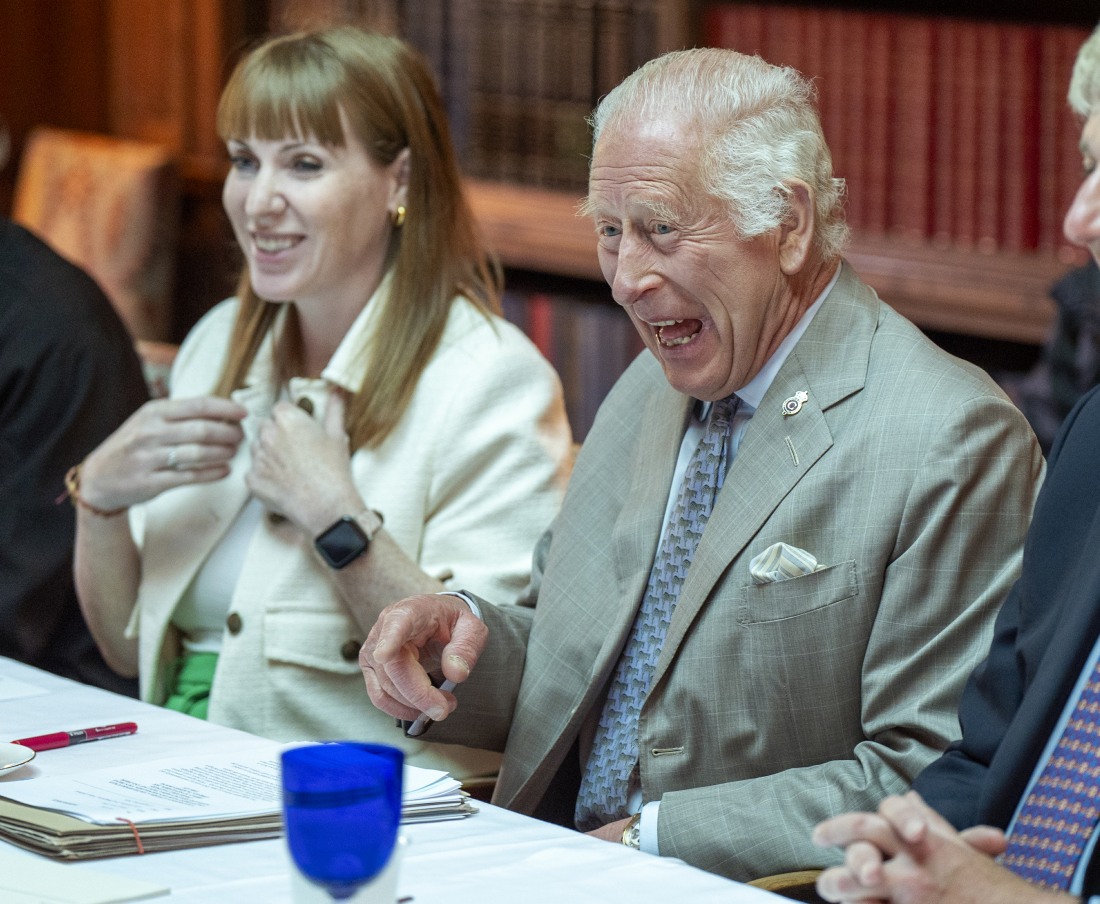
- King Charles III, alongside Deputy Prime Minister Angela Rayner, joins a discussion with the Scottish Violence Reduction Unit on youth opportunities to hear from charities working on the ground in Ayrshire, Glasgow and across the United Kingdom, at Dumfries House in Cumnock, Ayrshire. Dumfries House is the headquarters of The King’s Foundation, a charity founded by the King as the Prince of Wales in 1990. Picture date: Friday September 20, 2024.,Image: 910095209, License: Rights-managed, Restrictions: *** NO UK USE FOR 48 HRS ***, Model Release: no, Credit line: Jane Barlow/Avalon/Avalon
-
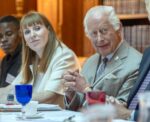
- King Charles III, alongside Deputy Prime Minister Angela Rayner, joins a discussion with the Scottish Violence Reduction Unit on youth opportunities to hear from charities working on the ground in Ayrshire, Glasgow and across the United Kingdom, at Dumfries House in Cumnock, Ayrshire. Dumfries House is the headquarters of The King’s Foundation, a charity founded by the King as the Prince of Wales in 1990. Picture date: Friday September 20, 2024. PA Photo.,Image: 910095609, License: Rights-managed, Restrictions: *** NO UK USE FOR 48 HRS ***, Model Release: no, Credit line: Jane Barlow/Avalon/Avalon
-
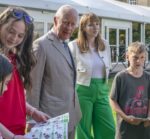
- King Charles III, with Deputy Prime Minister Angela Rayner, meets staff and students from Abbey Primary School who have been taking part in woodland educational activities delivered by The King’s Foundation on the Dumfries House Estate in Cumnock, Ayrshire. Dumfries House is the headquarters of The King’s Foundation, a charity founded by the King as the Prince of Wales in 1990.,Image: 910119365, License: Rights-managed, Restrictions: *** NO UK USE FOR 48 HRS ***, Model Release: no, Credit line: Jane Barlow/Avalon/Avalon
-
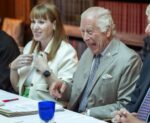
- King Charles III, alongside Deputy Prime Minister Angela Rayner, joins a discussion with the Scottish Violence Reduction Unit on youth opportunities to hear from charities working on the ground in Ayrshire, Glasgow and across the United Kingdom, at Dumfries House in Cumnock, Ayrshire. Dumfries House is the headquarters of The King’s Foundation, a charity founded by the King as the Prince of Wales in 1990.,Image: 910119453, License: Rights-managed, Restrictions: *** NO UK USE FOR 48 HRS ***, Model Release: no, Credit line: Jane Barlow/Avalon/Avalon
-

-
Britain’s Deputy Prime Minister Angela Rayner visits a construction site with Prime Minister Keir Starmer, in Cambridgeshire, Britain, December 12, 2024.
NO UK USE FOR 48 HOURS,Image: 945877173, License: Rights-managed, Restrictions: NO UK USE FOR 48 HOURS- Fee Payable Upon reproduction – For queries contact Avalon [email protected] London 44 20 7421 6000 Los Angeles 1 310 822 0419 Berlin 49 30 76 212 251 Madrid 34 91 533 42 89, *** NO UK USE FOR 48 HRS ***, Model Release: no, Credit line: Avalon.red/Avalon/Avalon
-

-
Downing Street, London, UK. 7th January 2025.
Angela Rayner, Deputy Prime Minister, Secretary of State for Levelling Up, Housing and Communities attends the weekly Cabinet Meeting at 10 Downing Street.,Image: 952222973, License: Rights-managed, Restrictions: Supplied by AVALON – Fee Payable Upon Reproduction – For queries contact Avalon – [email protected] London: 44 (0) 20 7421 6000 Los Angeles: 1 (310) 822 0419 Madrid: 34 91 533 4289, Model Release: no, Credit line: Photo by Amanda Rose/Avalon/Avalon