

Embed from Getty Images
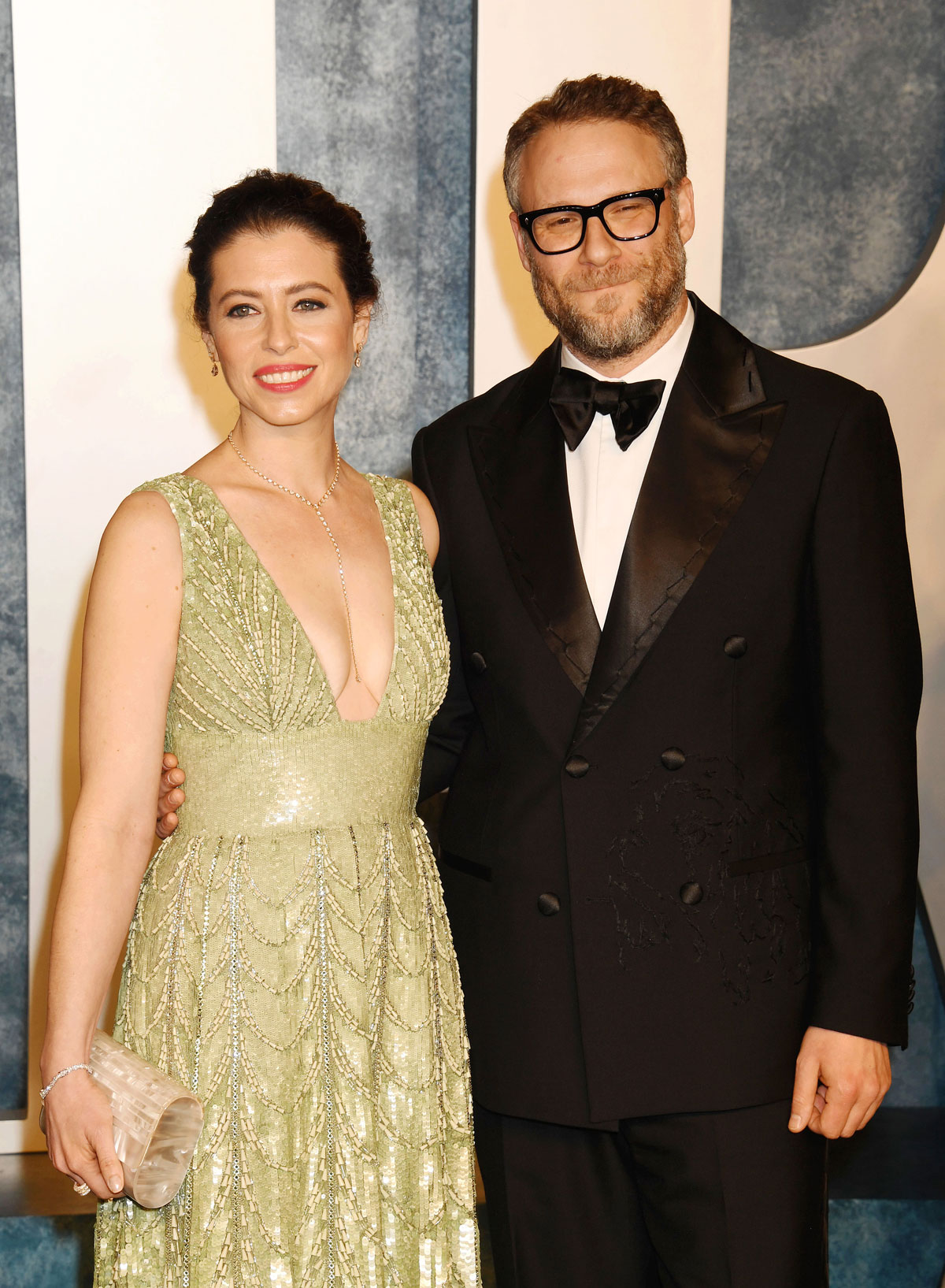
In 2012 Lauren Miller and her husband Seth Rogen started a foundation brilliantly named Hilarity for Charity that advocates for brain health and research, particularly as it relates to Alzheimer’s and dementia. The impetus came from the diagnosis of early-onset Alzheimer’s that Lauren’s mother Adele received at 55, as well as other close family members who have suffered from the two diseases. In light of her family history, Lauren has been proactive about screening for potential issues, which led to the discovery of an aneurysm in her brain in 2018. While speaking at the UCLA Department of Neurosurgery Visionary Ball, Lauren revealed that she had the aneurysm removed in a procedure last year, after MRI images showed it was starting to grow:
She elected to have a full body MRI because of family history: Lauren, who was inspired to form the nonprofit Hilarity for Charity to raise money for dementia care, research, and education due to her family history, said she decided to get a full body MRI five years ago. She noted that she made the decision “to take a deeper look at anything that could possibly be lurking inside me that would affect my longevity,” and the doctors were able to flag down a potential problem.
The MRI revealed a small aneurysm: “They found, of course, this sort of aneurysm in my head,” Lauren shared. “So of course, this was terrifying information, and made me think of my great-grandmother, whose fate I certainly didn’t want to mimic. Fortunately, it was relatively small, and I did what the doctors recommended that I do, which is have annual MRIs [to] track the size,” she continued. “It remained small, until it didn’t.”
Four years later the aneurysm grew: She said that doctors noticed the aneurysm started growing in her brain in the spring of 2022 — four years after they found it. Lauren revealed she immediately connected with UCLA neurosurgeon Dr. Geoffrey Colby, who had “Answered every single question” that she had, and made her feel “comfortable” about the procedure ahead to remove the aneurysm. She eventually underwent the procedure, and she’s had several follow-up appointments since then to make sure her brain remains healthy.
Coping with humor: In February, Lauren and Seth told PEOPLE that humor is “absolutely part of how we cope with things” after caring for Lauren’s mother Adele, who was diagnosed with genetic early-onset Alzheimer’s disease at age 55. “I’m lucky I live with a very funny person,” Lauren continued. “And as mom said back then, I’m funny sometimes too. For us, comedy is just sort of around and is absolutely part of how we cope with things naturally, whether we’re aware of it or not.”
Know your genetic risk factors: “Don’t be afraid to deep dive into that,” she said. “Because there are things that you can do to modify your genetics and to make lifestyle changes and live a brain-healthy life and potentially either delay or even maybe even prevent dementia or Alzheimer’s. The one thing that I urge people is to talk to their doctors about their genetics and understand what it is that is inside of them that is going to affect their brains as they age, and not be afraid of that information …” Lauren added. “We should be talking about caring for our brains, and it shouldn’t be scary.”
But Lauren, it is scary and I am afraid of that information! I’ve had headaches my whole life (I don’t think they’re the same as the ones the Mayo Clinic describes on their brain aneurysm page, but last I checked I’m not a doctor). My parents had me checked out as a kid and nothing ever showed up on the tests and screenings. As an adult who still gets the headaches, my parents beg me all the time to have my head looked at again, but honestly I feel like whenever I bring it up to a doctor they say “take Advil” or if I say I do take Advil they say “switch to Aleve” or, the perennial favorite, “do you have your period?” Then I’ve spent $30-$80 to continue taking Advil like I was doing on my own, and how much more money would it cost to push for an MRI that my insurance will probably deem unnecessary, and have I mentioned how much I hate the healthcare system in this country, and I have ANOTHER HEADACHE NOW.
In the spirit of Lauren’s enthusiasm for coping with comedy, here’s a story about the type of dementia my grandmother had. When my grandfather, her husband of 63 years passed away, the dementia conveniently took all her pain away. The death just did not register at all. I remember sitting shiva after the funeral, and all our family and friends were going up to her to give condolences and say how sorry they were for her loss. She smiled and thanked them, but then she turned to me, positively giddy, and said “I haven’t been this popular since I was sweet sixteen!” Bless. And later if we ever tried to bring up directly that my grandfather had died, she’d immediately refute it. “Nonsense, would I be eating ice cream if he were dead?!” I’ll have a scoop of what she’s having, please.
photos credit: Jeffrey Mayer / Avalon and Getty