
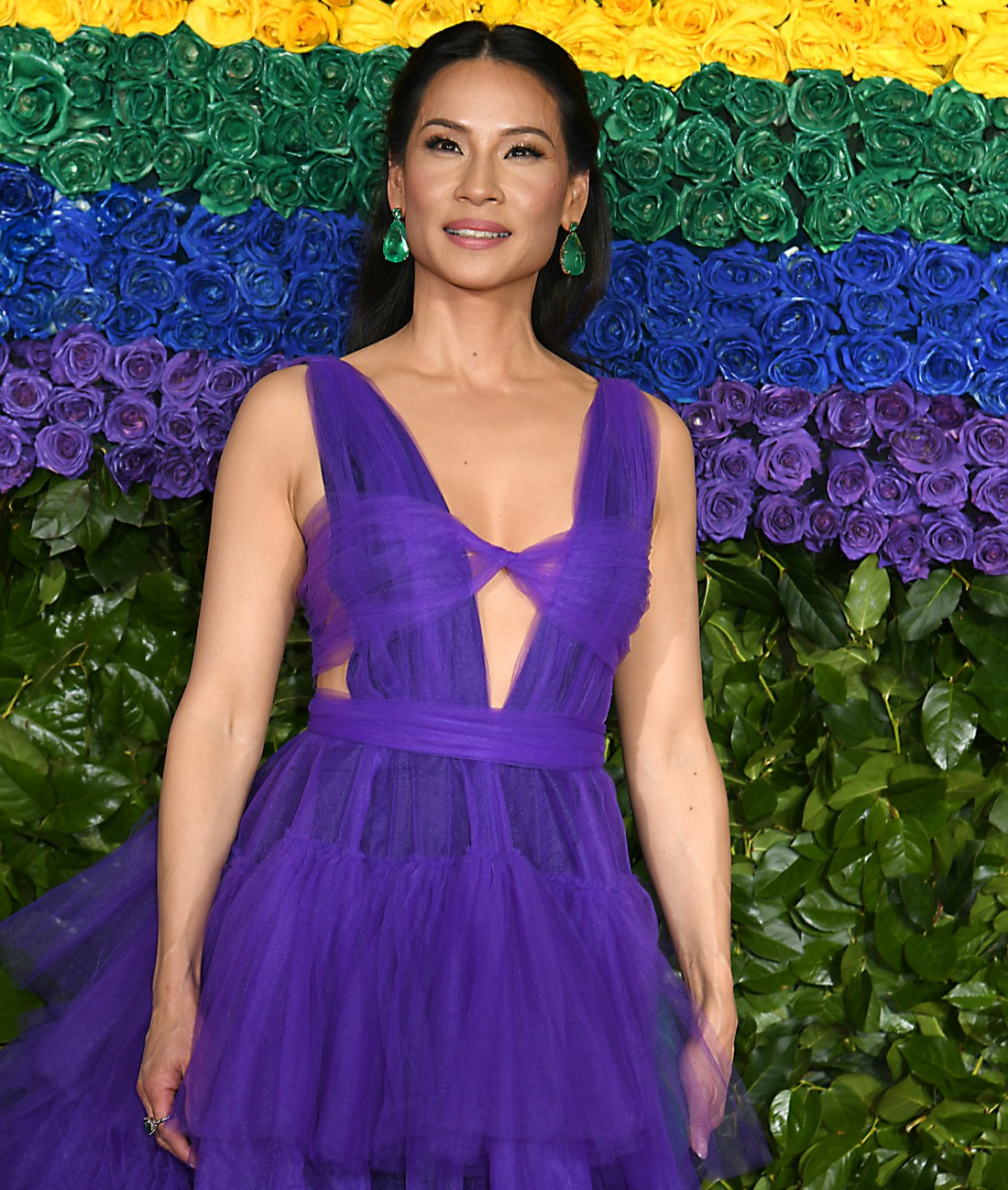
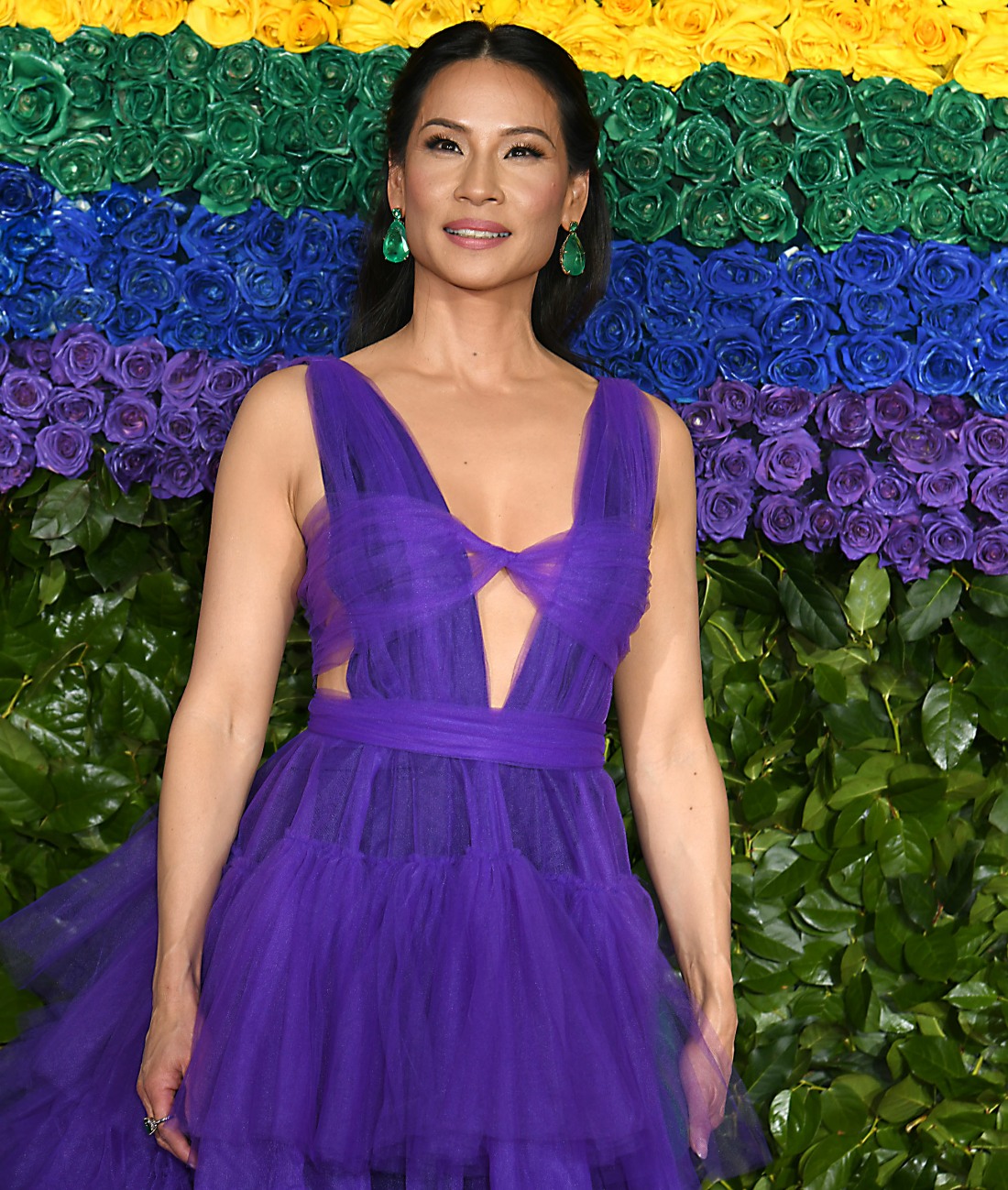
Lucy Liu isn’t just an actress, producer, director, independent woman and Asian-American icon. She’s also a multidisciplinary visual artist, and she’s currently promoting her new virtual exhibition at the Napa Valley Museum. To promote the exhibition, Lucy spoke to the LA Times’ Asian Enough podcast about her Asian-American identity, growing up in Queens, New York, and working with Bill Murray on Charlie’s Angels. When Charlie’s Angels was filming more than two decades ago, there were many rumors about Bill Murray falling out with cast members and just being generally unpleasant. I remember specific rumors about Murray verbally abusing Lucy especially. She addresses that directly for the first time in this interview. Some highlights:
Her independence: “I think I was born with it. I’ve always felt this wonderful urge to explore and be free, and I really love the idea of having that freedom creatively and as a woman, as a mom. There is something very freeing about that curiosity. And I love having people around me all the time and exploring that.
On getting her foot in the door in the industry: “A lot of people said to me: “There’s nobody that’s out there. There’s not a lot of Asian presence in media, television, film. You’re going to be very limited and you’re never going to make it.” I just thought: I don’t know what that means. I don’t know what “never” means. So let’s just try. It’s just one foot in front of the other. To me, the glass is always half full. I don’t even see it being empty at all. I guess I’m an optimist.
Growing up in Queens with immigrant parents: “We didn’t have very much money, so we grew up with whatever we grew up [with]. It’s that idea of, you get what you get and you don’t get upset. And if you do get upset, you get a mouthful of why you shouldn’t be upset. We were left to our own imagination and curiosity to do whatever we wanted. I’m not saying it was a simpler time, but there was not the complication of technology. There was no possibility of not attending high school and college. We didn’t discuss art and theater, and we didn’t do any of that because we had very limited funds. It was all about survival. And I think survival creates a very different environment than, let’s say, my child now has.”
The Bill Murray situation: “I feel like some of those stories are private. … But I will say, when we started to rehearse this scene, which was all of us in the agency, we had taken the weekend to rework that particular scene and Bill Murray was not able to come because he had to attend some family gathering. So it was everyone else, and we just made the scene more fluid. I wish I had more to do with it but I didn’t, because I was the last one cast and I probably had the least amount of privilege in terms of creatively participating at that time. …As we’re doing the scene, Bill starts to sort of hurl insults, and I won’t get into the specifics, but it kept going on and on. I was, like, “Wow, he seems like he’s looking straight at me.” I couldn’t believe that [the comments] could be towards me, because what do I have to do with anything majorly important at that time? I literally do the look around my shoulder thing, like, who is he talking to behind me? I say, “I’m so sorry. Are you talking to me?” And clearly he was, because then it started to become a one-on-one communication.
Standing up for herself to Bill Murray: “Some of the language was inexcusable and unacceptable, and I was not going to just sit there and take it. So, yes, I stood up for myself, and I don’t regret it. Because no matter how low on the totem pole you may be or wherever you came from, there’s no need to condescend or to put other people down. And I would not stand down, and nor should I have. I remember years later, maybe even decades later, some crew members that I didn’t even know at the time came up to me on other sets and told me that they were there at the time and they were really grateful that I did that. I have nothing against Bill Murray at all. I’ve seen him since then at a “SNL” reunion, and he came up to me and was perfectly nice. But I’m not going to sit there and be attacked.
What the press said about her at the time: “I don’t want to be that person that is not going to speak up for myself and stand by the only thing that I have, which is my dignity and self-respect. Because in the end, we all end up in the same place as time goes on. Nobody is immortal. But in that time, no matter what happens between now and whatever career choices I make or whatever life decisions I make, I will walk away with my dignity. I remember after that time, what came out in the press was that I was this and I was that. It was incredible to me how it was turned around and they automatically thought that the woman was the difficult one. … But I didn’t understand how it got flipped when I had nothing to do with instigating it or creating that platform of confrontation or anxiety. So even though it’s been decades, it’s something that obviously I remember very intimately and have not forgotten.
This is one of the reasons why there tends to be a kind of unsettling energy around Bill Murray. Sure, there are tons of stories about how he’s a great guy and all of the fun and crazy things he does on-set and in real life. But stories like Lucy’s have been around for years too, where Murray acts like a complete f–king jackhole, especially to women. I also think it’s interesting that it’s taken this long for Liu to feel comfortable enough to tell her side of the story. I remember Drew Barrymore – who executive produced those Charlie’s Angels films – always said nice things about Bill Murray, but she still replaced him as Bosley for the second film (she hired the late, great Bernie Mac). Did Drew and Cameron know the extent of it? Did they have Lucy’s back from Day 1?
Photos courtesy of Getty, Avalon Red.
