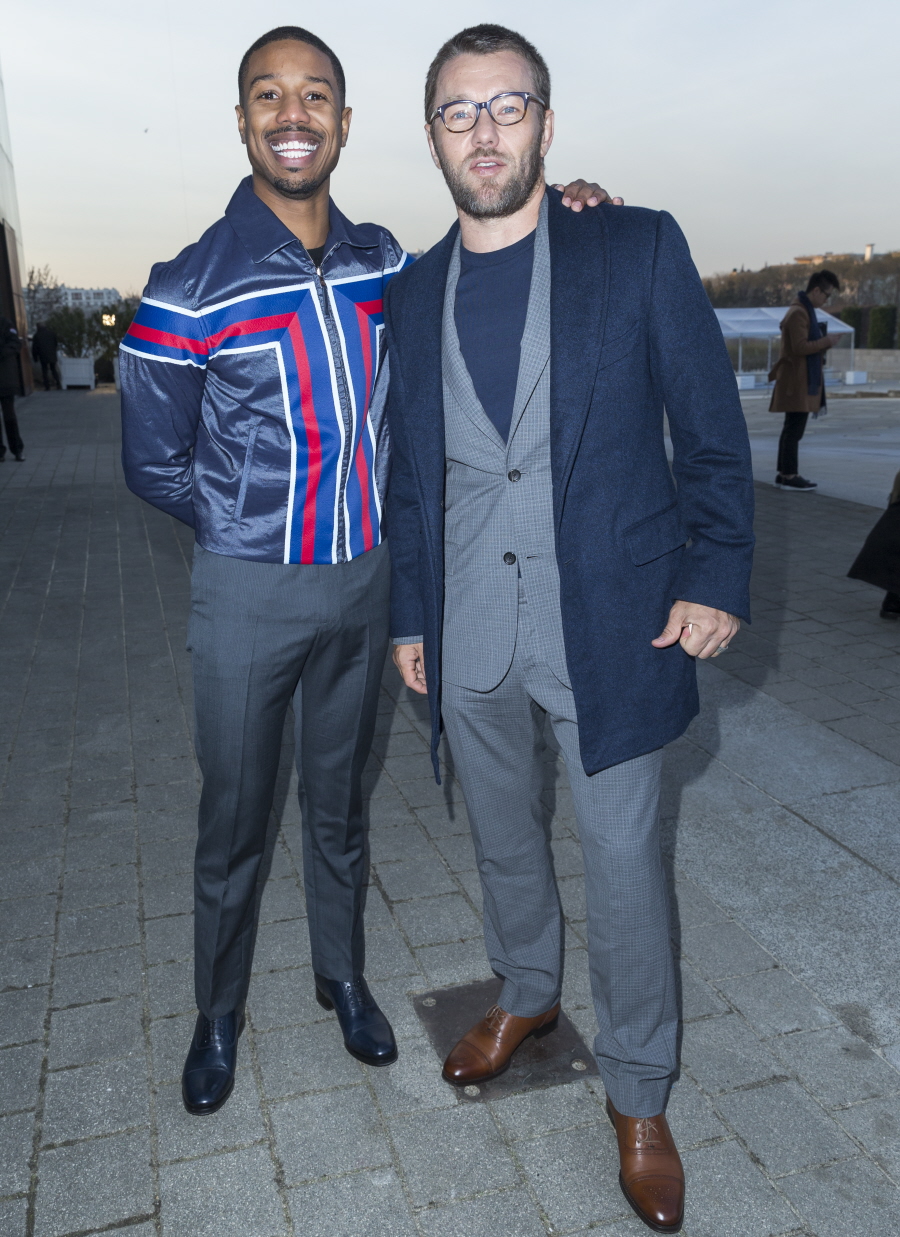
Here are some photos of Michael B. Jordan at the Louis Vuitton Menswear show in Paris yesterday. Look at this young man’s smile. He’s lovely, isn’t he? He’s always thoughtful and professional and hard-working. And despite the fact that he’s shown over the course of four years that he’s just as much of a star as Ryan Gosling or Bradley Cooper, Michael has never been nominated for an Oscar. I still feel strongly about this: Michael gave a heartbreaking, star-making performance in Fruitvale Station, and it still upsets me that the Academy didn’t recognize it. When he reteamed with Ryan Coogler for Creed, once again people raved about his performance, how good he is, how talented and multifaceted as an actor. And once again, MBJ was ignored. This is part of the reason why #OscarsSoWhite is a thing. This is just one example of how the Academy has been ignoring great work from racially diverse artists.
We’re now one week removed from the Oscar nominations announcement, and one of the most interesting things is that the #OscarsSoWhite discussion just keeps getting bigger and bigger. While I personally don’t think that a boycott will do much, I’m glad the boycott conversation is happening because it’s the vehicle by which we’re having this larger conversation about race, representation, diversity and equality in Hollywood. The Hollywood Reporter is using the boycott conversation for the same reason, and in this week’s issue, they’ve got several pieces about #OscarsSoWhite. Here’s a short column by Dawn Hudson, the CEO of the Academy:
There’s not one part of the industry that doesn’t need to be addressed, and it’s been this way for 25 years. The needle has hardly moved. It’s cultural, it’s institutional, it’s our society at large, it’s our education system — all of it — before you get to an industry that’s supposed to reflect this beautiful world. And the industry has been building up over a very long time, starting with white men running the studios who hire other people who look like them. It just hasn’t changed that much, and it won’t until there’s a concerted effort on every single front: talent, the executives in the studios, the people we mentor. If you have a person of color directing a film, there’ll be more people of color on the crew and in the movie. You have to overindex now on every hiring opportunity you have. You have to look at women and people of color every time there’s an opening and really not stop until you’ve worked to find qualified candidates. That’s for directing, crewing up, filling a marketing position, finding interns, hiring your next assistant. If you did that, it would go a long way.
At the Academy, the people we’ve hired in the past four years have been between 45 and 50 percent people of color. Our staff also has worked very closely with the executive committees in all the Academy branches to identify talented artists of color to make sure they’re being considered for membership. That has resulted in every class in the last four years being more diverse than the previous classes. We are stepping up our efforts in every area. You’ve already seen a change in membership and new members. You’ve seen a change in our staff. But I was devastated that the acting nominations were all white. There are a lot of artists of color who have put out really good work in more films than in other years. This feels like an inflection point, almost at a point of crisis. Everyone is talking about this. It’s not going to be overnight — just the pace can go faster. As [Chicago Mayor Rahm Emanuel] said, “Never let a good crisis go to waste.”