
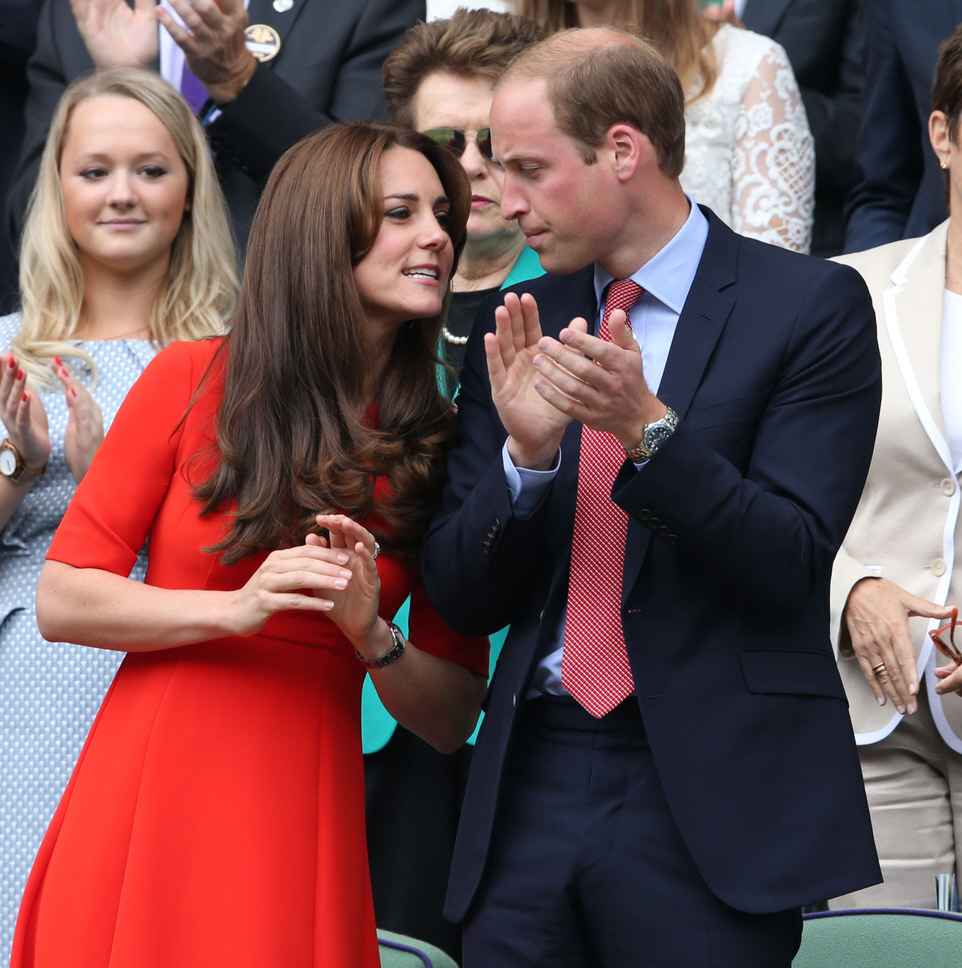
The Mail on Sunday excerpted a book called Diana’s Babies: Kate, William And The Repair Of A Broken Family by Angela Levin. To say this book is a glowing, obvious piece of royal propaganda would be an understatement. The Mail on Sunday’s excerpt is from a chapter in which Duchess Kate is lauded for bringing much-needed family values to William and how she’s made him a better man because he is… something something a father? The thesis is basically that everything William does is for his family, to keep them safe and protected, because Kate is the one woman who finally vanquished the ghost of Diana.
Princess Charlotte’s christening was a turning point for William: “Few of those watching in the summer sunshine would have remarked upon it, but this stroll with a Millson Prince pram symbolised that William had finally broken away from his dysfunctional past. And this, I believe, is largely due to the calming and stabilising influence of his wife and her close-knit middle class family.”
William is no longer paranoid? “The Middletons’ informality and William’s growing confidence as a father has clearly softened the shy second-in-line to the Throne, who has a dislike of conspicuous attention and a wariness of photographers verging on the paranoid. Yet to everyone’s surprise Kensington Palace confirmed that watching members of the public would be able to use their own cameras in the paddock outside the Sandringham church.”
William insisted on the Middletons being featured in the christening portraits: “William insisted, against tradition, that the Middletons featured prominently in the portraits.”
Nanny Maria’s presence & what it means: “There was someone else in plain view, too: Spanish-born nanny Maria Teresa Turrion Borrallo. She was kept in the background at George’s christening but at Charlotte’s was prominent in her brown Norland nanny uniform, and had the important job of looking after George during the ceremony – a sign of William’s growing confidence with his senior Royal status.”
When William brought George to St. Mary’s after Kate gave birth: “George then waved to the crowd from the safety of his father’s arms. William kissed him tenderly. It was a heart-melting moment that showed that William is no longer inhibited about expressing his emotions in public. Kate’s devotion, confidence and love had helped him trust his feelings.”
The change in William: “Above all, the change is clear in William himself, who is no longer the withdrawn, slightly angry presence from the past, but a smiling Prince at ease with himself and those he meets. Two years ago, I wrote that embracing Kate and her family was the best thing that could possibly happen to a young man like William, troubled by the early loss of his mother Diana, and the intensely difficult period that had preceded her death. Charismatic, but emotionally fragile, Diana had leaned far too heavily upon him during the slow, painful demise of her marriage to Charles.”
What Kate brought to the table: “By marrying her, William has drawn a firm line under everything his warring parents’ marriage represented. She understands William’s needs and accommodates his wishes. She has introduced him to the comfort and ease of a warm home and hearth – and the middle class values, which he has so readily embraced. In turn, he wants to protect his children and ensure that she never feels the isolation his mother did – and he has insisted on changes to the Royal way things are done. Even the normally intransigent courtiers who made Diana’s life so unhappy have had to bend to William’s wishes. As a result, he has the lifestyle he wants.”
William doesn’t have flunkies? “Unlike his father, who is surrounded by staff, Prince William has dispensed with flunkies, maids, footmen and valets. And in choosing to live away from the metropolitan glamour at Anmer Hall in rural Norfolk – a house jokingly referred to as the ‘baby bunker’ – he has given George and Charlotte the very best chance in admittedly rarefied circumstances of ‘as normal an upbringing as possible’.”